Should I Take Amino Acids Before or After a Workout?

Amino acid supplements are widely used to support workouts. But no one seems able to agree on when, exactly, you should take them.
We break down the research on amino acids to help you figure out the perfect time to incorporate them into your exercise routine.
Key Takeaways
- Your body uses amino acids to build proteins, which are important for muscle recovery and growth.
- Research suggests that amino acid supplements can support cognitive function, reduce muscle damage and soreness, and support muscle protein synthesis.
- Our bodies can't store amino acids long-term, so it's important to take amino acid supplements consistently.
- There is some limited evidence that suggests the optimal time to take them is before a workout.
See More: The 8 Best Supplements for Muscle Growth in 2026
The Essential Role of Amino Acids
Carriejune, founder of Minibeast, says:
"Amino acid supplements are great for supporting workouts. The most important thing is to take them consistently, though some evidence suggests the best time is shortly before your workout."
If you're serious about building muscle, you've likely heard of amino acids. In fact, you might have heard of them even if you're a beginner in the gym, or just started your first workout challenge.
That's because amino acids have exploded in popularity over recent years. Today, it can seem like everyone is taking amino acid supplements.
But are they really worth the hype?
Research suggests so. We'll cover the science behind these supplements in a second. First, we need to cover what makes amino acids so important.

Understanding Amino Acids
Amino acids are the building blocks of protein, and of life in general. All living things use them to survive and thrive.
You might already know that protein is used for muscle repair. Protein supplements, like whey protein, are popular precisely because they provide the protein needed for muscle recovery. And recovery is essential for muscle growth.
But proteins actually have many more uses than the muscle repair process. They're used to make enzymes, which are crucial for digestion. Proteins help support immune function, in part because they are used to make antibodies, which help protect us from sickness.
We're barely scratching the surface here. The point is, amino acids are vital, both for protein synthesis and overall wellness.
Bonus: How Much Does a Home Gym Actually Cost?
How Many Amino Acids Are There?
Not all amino acids are made equal. There are hundreds of them. Of those, 20 are considered crucial for protein synthesis.
Our bodies are able to naturally produce 11 amino acids. These amino acids are considered nonessential. They are: alanine, arginine, asparagine, aspartic acid, cysteine, glutamic acid, glutamine, glycine, proline, serine, and tyrosine.
Essential Amino Acids
Our bodies can't make the other nine amino acids. These amino acids are called essential amino acids. We need to get them from our diet.
The nine essential amino acids are: histidine, isoleucine, leucine, lysine, methionine, phenylalanine, threonine, tryptophan, and valine.
Certain foodstuffs are good sources of these essential amino acids. Protein sources that have all nine essential amino acids are considered complete.
Some are animal-based. Examples include beef, chicken, fish, eggs, and some dairy products.
Others are plant-based. Examples include soy, tofu, tempeh, quinoa, and buckwheat.
Supplements can also be a good source of amino acids.
Branched-Chain Amino Acids (BCAAs)
Three essential amino acids are known as branched-chain amino acids. They are leucine, isoleucine, and valine.
These amino acids are particularly prized by gymgoers. That's because they are thought to help muscles in a few different ways. They are crucial for muscle protein synthesis, are believed to help reduce muscle soreness and prevent muscle breakdown, and can support muscle growth.
Potential Benefits of Amino Acids
We've already covered some of the potential benefits of amino acids. But what does the research say?

Muscle Protein Synthesis
Muscle protein synthesis is the process by which your body repairs and grows muscle tissue. As we've explained, amino acids are essential for this process.
Research has confirmed this. For example, one study noted that essential amino acids are "necessary to increase muscle and whole-body protein synthesis."
Research also suggests that amino acid supplements can support muscle protein synthesis. For example, one 2025 review concluded that essential amino acids are associated with increased muscle protein synthesis. A study from the year before found that essential amino acid supplementation can "effectively stimulate muscle protein synthesis."
Muscle Soreness
Muscle building might happen during the recovery process, but it's built on the effort you expend while working out. As you likely know, working out can result in soreness.
Muscle soreness isn't inherently bad. In fact, it's a necessary part of muscle growth. Working out causes microscopic tears in your muscle tissue, and the repair process theoretically leaves your muscles stronger and larger than before.
But too much muscle pain can undermine your workout. It can also last for days, a phenomenon called delayed onset muscle soreness.
Research suggests that amino acid supplements can help with post-exercise muscle damage and soreness. One 2025 study found that BCAA supplements reduced muscle breakdown. Another 2025 study found that BCAA supplementation helped decrease muscle soreness.
Cognitive Function
Our minds play an important role in working out. For example, you might have heard of the mind-muscle connection. Many people find that consciously, intentionally focusing on their muscles during exercise helps improve form and results in better workouts.
That's hard to do if your mind is fatigued.
Amino acids play an important role in brain function. Research suggests that amino acid supplements can help support cognitive function.
For example, one study found that an essential amino acid supplement resulted in "improved attention and cognitive flexibility" in participants. Another study found that essential amino acid supplements improved executive function after aerobic exercise.
When to Take Amino Acids
It's clear that amino acid supplements can be beneficial. That leaves one question: When should you take them?
There are three schools of thought: pre-workout, intra-workout, and post-workout.
These are exactly what you think. Some people take their amino acids before their workout, others during their workout, and still others after their workout is over.
But which is best?
There hasn't been much research into this.
One 2025 study did examine the timing of BCAA supplements. 15 young men were split into three groups and put through an eccentric arm exercise.
The first group was given a placebo before and after exercise. The second was given BCAAs before exercise and a placebo after. And the third were given BCAAs after exercise and a placebo before.
Both groups given the supplements demonstrated improvements in delayed onset muscle soreness, upper arm circumference, and elbow range of motion. These effects were stronger in the group that took their supplement before exercise.
You could interpret this study as proof that the best time to take amino acid supplements is before exercise. But it also suggests that the most important factor is taking them at all.
It's important to note that our bodies can't store amino acids in the long-term. That means we constantly need to replenish them. A healthy diet and supplements are a great way to do this.
This also means that consistency is important. In other words, it's probably better to take a sufficient dose of amino acid supplements regularly at a less optimal time, versus trying to take them at the perfect moment and sometimes forgetting.
Amino Acid Supplements for Building Muscle

Lots of amino acid supplements contain only a few amino acids. Some deliver just the three BCAAs. Others give you all nine essential amino acids.
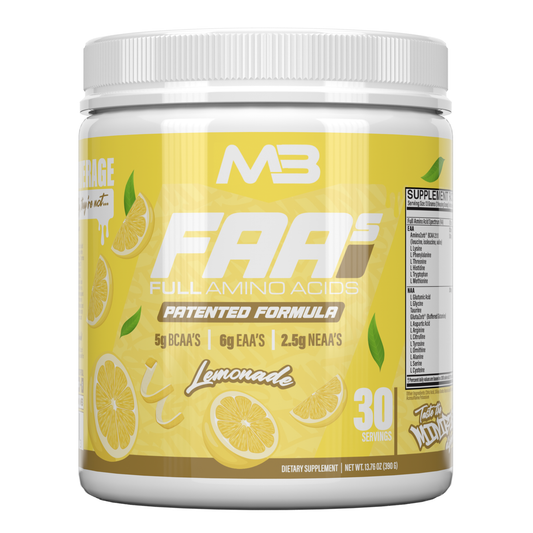
But you need more than those to thrive. Minibeast's FAAs give you all 21 amino acids. Branched-chain, essential, nonessential... they're all there, ready to help you take your workouts (and muscle growth) to the next level.
"I take FAAs every day," says Carriejune, founder of Minibeast. "It keeps my recovery tight and my body in check."
Conclusion
Research shows that amino acid supplements can support workouts. There's limited evidence to suggest the best time to take them is before a workout, but taking them after seems to help as well.
In other words, the most important thing is taking amino acid supplements consistently.
Frequently Asked Questions
Are Amino Acids Better Before or After a Workout?
Amino acids can help support a workout when taken before or after exercise, even if it's before bed or at night time. There's some evidence suggesting that taking them before provides more intense effects, but the most important thing is taking them consistently, whether you work out at home or in the gym.
What Is the Best Time to Take Your Amino Acids?
You should take your amino acids at the best time for your personal schedule. There's some evidence to suggest the most optimal time to take them is before exercise, but the most important thing is consistency.
What Is the 2-Hour Protein Rule?
The 2-hour protein rule refers to the two hours after a workout, a period sometimes called the anabolic window. People who follow the rule try to consume between 20 and 40 grams of protein during that window.
Keep Reading: What Is Whey Protein Isolate Vs. Whey Protein Concentrate?
--
Minibeast believes that everyone has the power to evolve into their best self. From state-of-the-art fitness equipment to comprehensive training programs, our brand is built for those who take their goals seriously. Through The Heart of Minibeast, 5% of every order helps feed families in need and support community programs. Get the latest workout tips, product updates, and fitness content by following us on Instagram, Facebook, YouTube, and TikTok.
–
These statements have not been evaluated by the Food and Drug Administration. These products are not intended to diagnose, treat, cure, or prevent any disease. The information provided on this website is for informational purposes only and is not intended as a substitute for professional medical advice, diagnosis, or treatment. Always seek the advice of a qualified healthcare provider with any questions you may have regarding a medical condition or before starting any new diet, exercise program, supplement, or using any fitness equipment or apparel. By using this site and its products, you acknowledge that you do so at your own risk. Use all products only as directed and discontinue use immediately if discomfort or adverse effects occur.