How To Do Squats With Dumbbells

If you haven't incorporated dumbbell squats into your lower-body workouts, you're missing out on one of the most versatile exercises out there.
Read on for step-by-step tutorials on ten dumbbell squat variations. Add them to your workouts to spice things up and target specific muscle groups you might otherwise miss.
Key Takeaways
- Dumbbell squats are a versatile, effective lower-body exercise.
- You can use dumbbells to increase the effort of your squats.
- Dumbbells make it easy to target just one leg, which is great for building leg strength.
- There are many variations, each with specific advantages.
Dumbbell Squats for Building Muscle
Carriejune, founder of Minibeast, says:
"Dumbbell squats are a fantastic way to build lower-body strength and stability. There are all kinds of variations, from those targeting single legs to some targeting specific muscle groups."
Squats are one of the most iconic, popular exercises for building strong, defined legs and glutes. A simple bodyweight squat is a simple but effective exercise.
Adding weight to the equation can elevate your workout.
Dumbbell squats help you target your quads, glutes, calves, and hamstrings. When done right, they also enhance core strength and stability.
One of the best things about dumbbell squats is their versatility. You can use them for your traditional squat, of course. But with subtle changes in position and motion, you can unlock a wide range of squat variations.
These variations can help you target tricky muscle groups, address muscle imbalances, and make your workouts more interesting.
Dumbell Squats vs Barbell Squats
When you think of weighted squats, chances are you picture the traditional barbell squat. Don't get us wrong, that's a fantastic exercise.
But dumbbell squats do have a few advantages. For one thing, you have to hold the weights in your hands, which reduces the compressive load on your spine. That's especially good for beginners or people with back issues.
While you can use barbells for single-leg squat variations, it's easier to use a single dumbbell. Dumbbells are also more compact, making them ideal for home gyms.
Another advantage of dumbbells is how easy they are to switch out. You can easily switch between heavy weights and lighter weights when needed.
That's especially true if you have adjustable dumbbells. We'll cover that in more detail later.

The Basic Dumbbell Front Squat
The first type of squat you'll want to learn is the basic front squat. It's the classic version of the squat, central to lower-body workouts around the world.
To start, choose your weight. If you've never done a dumbbell squat before, err on the lighter side. Remember, you can always switch to heavier dumbbells if you need more weight. That's always preferable to recovering from an injury.
Your chosen weight should be challenging, but not so heavy that you can't maintain good form.
But what is good form?
For the starting position, stand with your feet shoulder-width apart. Your toes should be pointed slightly outwards.
Hold each of your dumbbells at shoulder height. Your palms should be facing each other. You can rest your dumbbells on your shoulders. Keep your elbows tucked in, pointing forward and a little bit up.
Before you start, make sure to engage your core. It's essential for maintaining stability and protecting your spine throughout the movement. Brace your entire torso to prepare for the squat.
Now it's time to descend. Sit your hips back and down, keeping your knees in line with your toes. Don't let your knees cave in and prevent your chest from dropping forward.
The aim is to keep your torso upright. Holding your dumbbells in front of you, with your elbows pointed forward, should help with that.
Try to lower yourself until your thighs are parallel to the floor. If you're mobile enough, you can go even deeper.
You'll know if your mobility is at its limit if your heels start to come up from the ground. They should stay flat throughout the entire movement.
If you can't squat without your heels coming up, you might need to work on your ankle mobility. In the meantime, you can place a weight plate (or something similar) under your heels.
Once you've reached the bottom of the movement, it's time to power yourself back up. Press through your entire foot, focusing on engaging your leg muscles and maintaining your core stability.
And you're up! Nice work. Now it's time to do it all again.
Make sure you're still engaging your core and bracing your torso before beginning the next rep.
You can also use resistance bands to increase the difficulty.
Dumbbell Squat Variations
Once you've mastered the basic front squat, you can move on to one or more of the many squat variations. Here are a few.
Goblet Squats
Goblet squats are great for practicing the mechanics of squatting. They encourage you to maintain an upright torso and achieve proper depth. In other words, they're a great tool to practice proper squat form.
You'll only need a single dumbbell for this squat. Hold it with both hands at your chest, elbows pointed down. When you squat, keep your elbows in between your legs.
To increase the burn, you can add some squat pulses. Instead of returning to your standing position, stay low and pulse up and down. These are great for building muscle endurance, as long as you can handle the burn.
Narrow Stance Squats
Narrow stance squats are a simple variation. Stand with your feet at hip-width rather than shoulder-width apart. Then squat with two dumbbells as normal.
You'll probably get less depth than with a normal squat, as the narrow stance can reduce your hip mobility. That's fine. Just make sure to keep your knees tracking straight over your toes during the motion.
The narrow stance helps target your outer quads. They're what help build that classic full, defined upper leg.
Sumo Squats
For sumo squats, you want to go wide. Place your feet wide apart and turn your toes at least 45 degrees outward.
Hold one dumbbell at chest height and lower down, keeping your upper body tall. Make sure your knees remain in line with your toes.
This wide squat stance helps train your inner thighs and glutes. It can also help reduce the stress on your knees during deep squats.
Dumbbell Split Squats

Split squats are a great exercise for unilateral strength training. You can use them to address muscle imbalances or increase the load on each leg without actually holding more weight.
For split squats, you want to stagger your standing position, one foot in front of the other. Hold your dumbbells in each hand, either at your sides or at your shoulders.
Lower your back knee down, keeping your front shin vertical and your torso upright. Focus on driving through your front heel when returning upward, feeling your glute power you upright.
Bulgarian Split Squats
Bulgarian split squats involve elevating your back foot. You can use a bench, sofa, or any other stable surface. The elevation increases your range of motion, and you'll feel the burn in your glutes and quads.
Your elevated back foot should be laces down. Hold your dumbbells at your side.
Lean forward slightly and lower your back knee to the floor. Your front knee should travel forward over your toes. It shouldn't collapse in or out.
B Stance Squats
B stance squats are similar to split squats. Another way of looking at them is like a middle ground between split squats and single-leg squats.
In this instance, your back leg is more of a training wheel than a driving force in the movement. Your back foot should be on its toes, while the majority of your weight should be on your front foot.
Sissy squats dispense with hip movement to isolate your quads more than practically any other squat variation. They might look intimidating at first glance, but they are a seriously powerful move once you get the hang of them.
Hold a single dumbbell at your chest. Either rise on your toes or place a weight plate under your heels for stability.
Next, lower your knees forward and lean your torso back at the same time. Try to keep your body in a straight line, from your shoulders down to your knees. Make sure to control your descent, then use your quads to drive yourself back upright.
Hack Squat
A hack squat is basically the same as a normal front squat. The major difference is that you raise your heels. You can use a weight plate, dumbbell, or some other solid surface.
Back Squat
Dumbbell back squats are essentially barbell squats, but with a dumbbell. You hold the dumbbell on your shoulder, resting it on your upper traps. Then squat as normal.
Where to Get Dumbbells for Squats

Squats require minimal equipment. They can be done with nothing but bodyweight.
For dumbbell squat variations, all you need is the dumbbells themselves. Make sure to grab solid, high-quality dumbbells. You want your weights to withstand the pressure of your workouts, whether that involves being dropped or stood on.
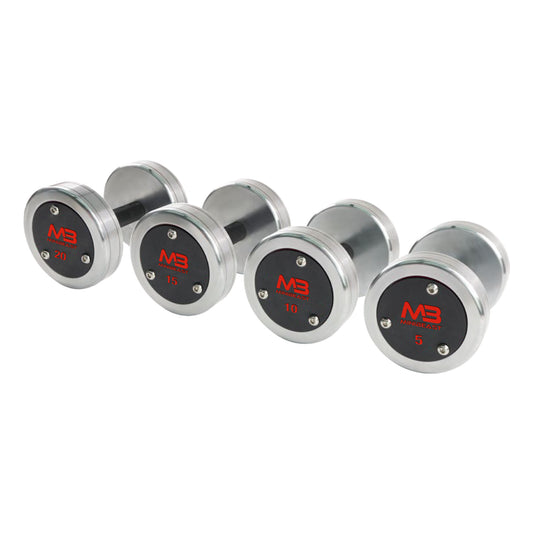
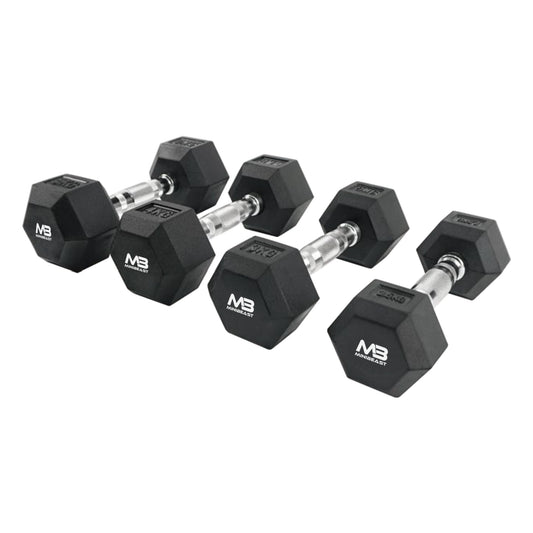
For that, look no further than Minibeast's MB Signature CNC Stainless Dumbbell. If you prefer a rubber surface rather than metallic, go for our MB Rubber Hex Dumbbell instead.
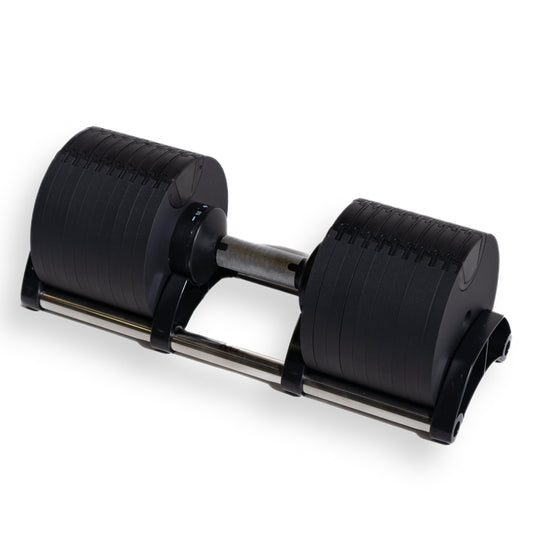
High-quality dumbbells are great. But if you want to use a range of weights and need to save space, you might want adjustable dumbbells. A set of adjustable dumbbells can replace an entire rack of traditional dumbbells.
Minibeast's MB Pro Adjustable Dumbbells range from 10 to 100 pounds. You can switch between different weights in seconds. A unique structure ensures the adjustment system and handle never bear force, making them sturdy.
Conclusion
Dumbbell squats are some of the most versatile, effective lower-body and leg exercises out there. You can perform squats in the gym or at home. All you need are some dumbbells and knowledge of proper form.
Frequently Asked Questions
Is Squatting With Dumbbells Effective?
Yes! Squatting with dumbbells is a highly effective way to build lower-body strength and enhance muscle growth. It's also a great way to improve stability.
How to Do a Dumbbell Squat Correctly?
Stand with your feet shoulder-width apart. Hold your dumbbells in your hands, palms facing each other, at shoulder height. Lower yourself down, keeping your torso upright and ensuring your knees remain in line with your toes. Then drive yourself back up, keeping your core activated for stability.
What Is the 3-3-3 Rule In the Gym?
The 3-3-3 rule is a simple framework to help people stay active. Each workout involves three circuits; each circuit contains three exercises; and each exercise is performed for three sets.
-
Minibeast believes that everyone has the power to evolve into their best self. From state-of-the-art fitness equipment to comprehensive training programs, our brand is built for those who take their goals seriously. Through The Heart of Minibeast, 5% of every order helps feed families in need and support community programs. Get the latest workout tips, product updates, and fitness content by following us on Instagram, Facebook, YouTube, and TikTok.
–
These statements have not been evaluated by the Food and Drug Administration. These products are not intended to diagnose, treat, cure, or prevent any disease. The information provided on this website is for informational purposes only and is not intended as a substitute for professional medical advice, diagnosis, or treatment. Always seek the advice of a qualified healthcare provider with any questions you may have regarding a medical condition or before starting any new diet, exercise program, supplement, or using any fitness equipment or apparel. By using this site and its products, you acknowledge that you do so at your own risk. Use all products only as directed and discontinue use immediately if discomfort or adverse effects occur.