How Much Does the Average Hex Deadlift Bar Weigh?

If you're going to use a hex bar, you need to know how much it weighs. That's a more complicated question than you might think.
We break down the factors that affect hex bar weights and cover some common weight ranges to help you get a better idea of how much you're lifting.
Key Takeaways
- Hex or trap bars are specialty barbells.
- A hex barbell typically weighs 45 to 55 lbs.
- Instead of a straight bar, they have a hexagonal frame that you stand in while lifting.
- Hex bars offer a more neutral grip and keep the load closer to your center of mass.
- Many lifters find they can lift more weight with a hex bar compared to a straight barbell.
- There's no standard weight for hex bars.
See More: Can You Repeat Same Workout Twice a Week? (Yes!)
How Much Does a Hex Bar Weigh?
Carriejune, founder of Minibeast, says:
"Hex or trap bars are a useful tool that might help you lift heavier weights. A hex barbell typically weighs 45 to 55 lbs."
Ever done the same lift on two different hex bars and felt like you were tackling a different weight? There's a chance that might have been the case.
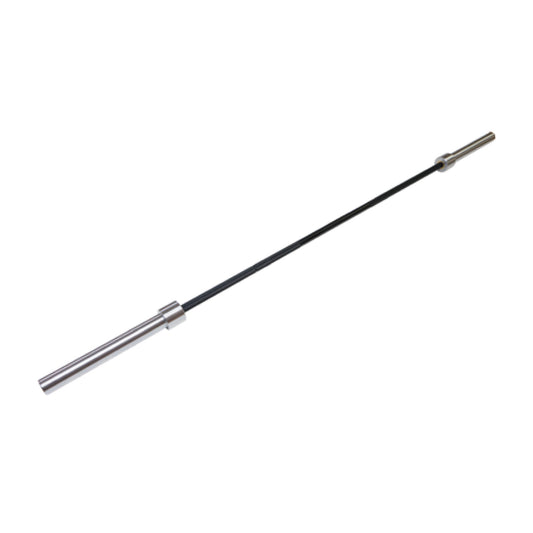
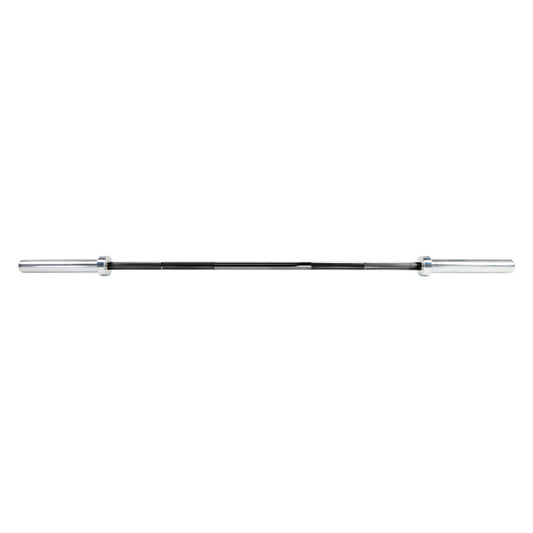
Theoretically, the standard hex bar weight is 45 lbs. Standard Olympic barbells also weigh 45 lbs. (That's 20 kg)
However, in reality, the weight of different hex bars varies widely, depending on the make and manufacturer. Many standard hex bars weigh 55 lbs. Hex bars can range from as light as 15 lbs to 90 lbs or more.
We'll break down what kind of weights you can expect from different kinds of hex bars to help you figure out exactly how much you're really lifting.

What Are the Key Features of a Hex / Trap Bar?
Hex bars, or trap bars, are a popular kind of specialty barbell. They're used for strength training.
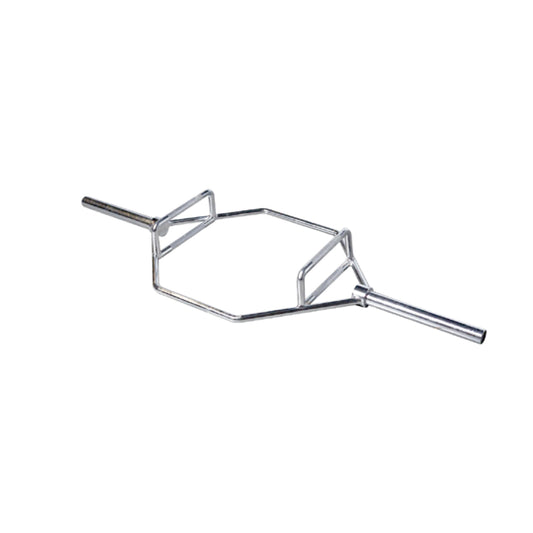
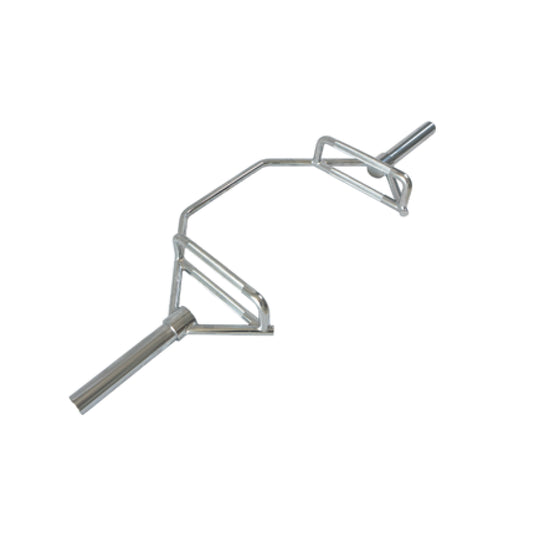
Unlike a straight barbell, hex bars have a hexagonal frame. You stand inside that frame, holding handles on each side. The weight plates go at either end.
This design is also called a closed trap bar.
What Is an Open Trap Bar?
Some trap bars aren't fully enclosed. Instead of a full hexagon, the frame is shaped more like a U or C.
The opening in the frame lets you step straight in and out, instead of having to step over and into the frame. That makes open trap bars popular for movements like split squats, where a fully enclosed frame might get in the way of your legs.
You might think that an open trap bar would weigh less. In fact, it's usually the opposite. When a frame is fully closed, it naturally supports itself. To make up for that, open trap bars need extra reinforcement, which adds more weight.
Open trap bars can weigh 60 - 80 lbs or even more.
What Makes Hex Bars a Good Piece of Gym Equipment?
There are a few reasons people use hex bars.
One of the main potential advantages is grip. The handles mean your palms face each other, instead of facing your legs. That neutral grip is easier on your joints, including your wrists, elbows, and shoulders.
Many hex bars have multiple handle heights, too. Higher handles mean a shorter range of motion, which can be helpful for beginners.
Another major potential advantage is the fact that hex bars allow for a centered load. Because you're standing in the middle of the frame, the weight you're lifting is in line with your body's center of mass. With a standard barbell, it's in front of your legs.
That centered load can help reduce stress on your lower back.
All that means a potentially higher load capacity compared to standard bars. Some sources suggest that many lifters can pull 5% - 10% more weight with a trap bar compared to a straight barbell.
What Are Hex Bars Used For?
Hex bars are useful for a wide range of exercises. One of the most popular exercises is hex or trap bar deadlifts. Using a hex bar can help shift more of the load to your quads.
Other common exercises include squats, shoulder shrugs, loaded carries, Romanian deadlifts, bench presses, and even overhead presses.
Hex bars aren't as common as standard barbells. You can find them in many commercial gyms, but not all. They make a great addition to a home gym setup.
Bonus: How Long Should I Be Working Out at the Gym For?

How Much Does an Average Hex Bar Weigh?
As we mentioned, hex or trap bar weights vary depending on the material, size, sleeve length, and design. The sleeves are the bars that hold the weight plates.
Many standard trap bars weigh 45 - 55 lbs.
How Do Hex Bar Weights Vary?
Open designs usually weigh more. Some trap bars have longer sleeves, which often means a heavier weight due to more material. Heavier-duty trap bars use thicker metal tubing, which also adds weight.
Heavy-duty commercial trap bars often weigh 60 - 70 lbs or more. Some specialty bars can weigh 80 lbs or more, before you even add weight plates.
There are lighter models, too. They can be good options for beginners. Lightweight or entry-level hex bars often weigh 25 - 45 lbs, though some are even lighter.
Some hex bars are rackable. They're made to fit on top of power racks or squat racks. These rackable hex bars usually weigh 55 - 65 lbs.
Why Does the Exact Weight Matter?
Knowing the empty bar weight is important because accurate load tracking is important. You need to know exactly how much you're lifting, because that lets you accurately track your progress.
One of the fundamental principles of strength training is progressive overload. That means continually increasing the challenge of your workouts to ensure your muscles continue adapting.
If you don't know how much you're lifting, maintaining efficient progressive overload becomes a lot more difficult. That can undermine your progress. If you accidentally try lifting too much weight, you could risk injury.

How Can I Build Muscle and Burn Fat?
Hex bars are a fantastic piece of equipment for beginners, intermediate lifters, and experienced lifters. They're a great way to build muscle strength and size.
Learning how to use hex bars and other pieces of gym equipment can be difficult and time-consuming. So can managing a workout and nutrition routine.
One way to simplify all of that is signing up for a professionally designed workout program. Minibeast's 8-Week Workout Challenge gives you the structure and guidance you need to lose weight and build muscle.
You get access to five full workout programs, custom calories, example diets, exercise demonstrations, a private support group, supplement recommendations, and so much more. Hundreds of thousands of people have used this workout program to smash their fitness goals.
Conclusion
Hex bars are a unique kind of barbell that can help with certain exercises. They usually weigh 45 - 55 lbs, though their weight varies widely based on design and materials used.
Frequently Asked Questions
Is the Hex Bar 45 lbs?
Many hex or trap bars weigh 45 lbs, but not all. The weight of unloaded hex barbells can range from 35 - 80 lbs, depending on make and manufacturer. Some specialty bars are even lighter, and some even heavier, than that range, too.
Are Hex Bars Heavier Than Barbells?
Hex or trap bars are specialty barbells. They're often heavier than standard Olympic barbells, which weigh 45 lbs.
Is a Hex Bar 60 lbs?
Some hex or trap bars are 60 lbs. However, many bars are 45 - 55 lbs. Budget and entry-level bars are usually on the lighter side, often weighing 35 - 50 lbs.
Keep Reading: How Much Does a Gym Membership Cost? What to Consider
--
Minibeast believes that everyone has the power to evolve into their best self. From state-of-the-art fitness equipment to comprehensive training programs, our brand is built for those who take their goals seriously. Through The Heart of Minibeast, 5% of every order helps feed families in need and support community programs. Get the latest workout tips, product updates, and fitness content by following us on Instagram, Facebook, YouTube, and TikTok.
–
These statements have not been evaluated by the Food and Drug Administration. These products are not intended to diagnose, treat, cure, or prevent any disease. The information provided on this website is for informational purposes only and is not intended as a substitute for professional medical advice, diagnosis, or treatment. Always seek the advice of a qualified healthcare provider with any questions you may have regarding a medical condition or before starting any new diet, exercise program, supplement, or using any fitness equipment or apparel. By using this site and its products, you acknowledge that you do so at your own risk. Use all products only as directed and discontinue use immediately if discomfort or adverse effects occur.