How to Develop Your Upper Glute Shelf

A strong upper glute shelf can separate a good booty from a great one. We break down what your upper glutes are, explain how to grow them, and cover some effective exercises to help you build the butt shelf of your dreams.
Key Takeaways
- Your upper glute includes your gluteus medius and the upper portion of your gluteus maximus.
- Well-developed upper glutes can create a "shelf" appearance, enhancing your figure.
- The upper glutes are also important functionally, supporting stability and power in the lower body.
- Effective upper glute exercises include hip thrusts, deadlift variations, lunge variations, and hip abductions.
See More: Do Waist Trainers Help with Loose Skin?
How Do I Build Strong Upper Glutes?
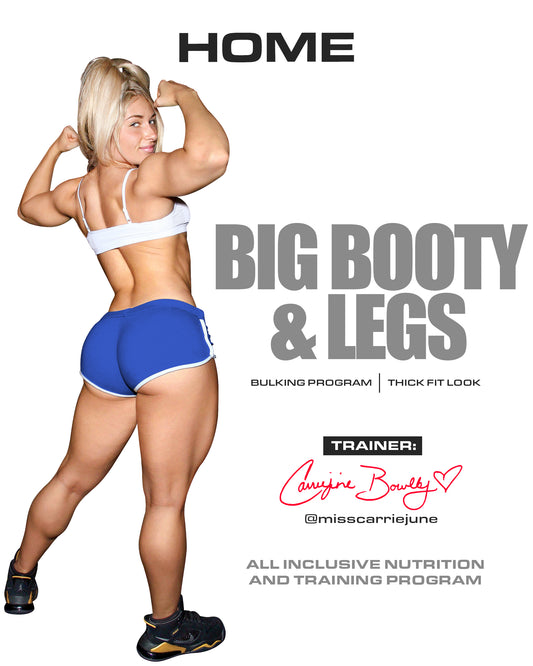
Carriejune, founder of Minibeast, says:
"Building your upper glute shelf is important for both aesthetics and function. It's also easier than you might think, as long as you know the right exercises."
If you're trying to build a stronger, rounder, fuller booty, you need to focus on your upper glute area.
That means more than endless squats. We'll break down how your upper glutes work and some effective exercises to maximize upper glute engagement and growth.

What Are the Upper Glutes?
Your glutes consist of three muscles.
The largest of the three is called the gluteus maximus. It plays a key role in hip extension and posture.
Above it, on the outer side of the pelvis, lies the gluteus medius. It's important for keeping the pelvis stable and supporting hip abduction and rotation.
Underneath the gluteus medius lies the deepest glute muscle, the gluteus minimus.
What's the Difference Between the Upper and Lower Glutes?
Your upper glutes include your gluteus medius and the upper portion of your gluteus maximus. They're important for hip stability and side-to-side movement.
Your lower glutes are the bottom fibers of your gluteus maximus. They're important for power, driving most of the lower-body movements you likely do every day.
Why Are Upper Glutes Important?
Strong upper glutes are important for a number of reasons.
Of course, there are aesthetic reasons. Well-developed upper glutes help fill out hip dips and emphasize the separation between your waist and glutes. A solid set of upper glutes can create a lifted, rounded appearance called a "glute shelf" or "shelf butt", which can be emphasized by a pair of scrunch leggings.
However, your upper glutes are important for many reasons beyond aesthetics.
The upper glutes play a crucial role in maintaining pelvic stability and alignment. This can help enhance posture.
They also help keep your hips and knees aligned. A strong set of upper glutes can reduce the risk of knee injuries.
Strong upper glutes can also enhance your athletic performance, including in compound lifts.

What Makes a Good Upper Glute Workout?
There are plenty of exercises that can target your upper glutes. Before we get to them, we need to cover some basic principles that you can apply no matter which movements you choose.
What Is Proper Form?
Good form means performing a movement the correct way. You can watch online tutorials or follow professional workout programs to learn proper form for specific movements.
In general, good form means controlling each rep without using momentum to help yourself.
Good form helps make your workouts more efficient. It keeps the focus on the muscles you are targeting. Poor form, on the other hand, can cause other muscles to get involved in a movement.
Proper form also helps protect you from injury.
How Do I Achieve Glute Activation?
Muscle activation means focusing your mind on the specific muscle, or muscle group, that you want to work. The mind-muscle connection is more important than you might think. Research suggests that it can enhance performance.
If you've ever felt like other muscles, like your quads, were getting involved in what should be a glute exercise, despite maintaining good form, the issue might be muscle activation. Try to focus hard on squeezing and working the specific muscle you want to target.
A good warm-up can help with muscle activation. Try some glute bridges or banded lateral walks to activate and get in touch with your glutes before subjecting them to heavy lifts.
Pausing at the point where your glutes are most contracted, like at the top of a hip thrust, can also help with activation.
What Is Progressive Overload?
As you probably know, muscles don't just grow on their own. We need to challenge them. They adapt to that challenge by growing stronger and larger.
In order to keep challenging them, we need to continually increase the difficulty or resistance. That principle is called progressive overload. It's crucial for muscle growth.
You can increase resistance and maintain progressive overload in various ways. The most common is by adding more weight to a movement. You can also add more reps or sets, reduce rest periods, or try harder variations of a movement.
How Often Should I Train My Upper Glutes?
In order to maintain progressive overload and make progress, you need a sufficient training volume. For most people, that means training your upper glutes at least twice per week.
When you train your upper glutes, try to incorporate a mix of compound exercises and isolation exercises. For heavy compound lifts to build strength, many people aim for 4 to 6 reps. For lighter isolation exercises, you can aim for a higher rep range.
What Do I Need to Eat to Build My Upper Glutes?
Muscles won't build themselves without training. They also won't build themselves without proper nutrition.
Your body needs enough energy to exercise in the first place and repair itself from that exercise. That means eating enough. Many people find it easier to build muscle on a slight calorie surplus.
In order to build muscle, your body needs protein. Experts often recommend a high-protein diet when building muscle. A general target is 1.6 to 2.2 grams of protein per kilogram of body weight. That's roughly 0.7 to 1 gram of protein per pound of body weight.
Try to build a healthy, balanced diet based on nutrient-dense, whole foods. Focus on lean proteins, healthy fats, and complex carbs.
If you need a hand hitting your protein goals, use a high-quality protein powder.
Hydration is also important, both for muscle performance and recovery. Make sure to drink enough water before, during, and after your workouts.
Why Is Recovery Important?
Your body doesn't actually build new muscle tissue until you rest. Recovery is therefore essential for progress.
In part, that means getting enough sleep. Experts usually recommend aiming for 7 to 9 hours of quality sleep per night.
It also means giving your muscles enough time to rest and recover between workouts. Muscles generally need about 48 hours to recover, though that can vary depending on the intensity of your workout.
Almost all high-quality workout plans include rest days. That doesn't necessarily mean lounging around doing nothing, though. You can do active recovery, which means light movements like stretching, walking, or yoga.
Sacrificing rest and recovery won't make you progress any faster. Quite the opposite. It can lead to burnout and injury.
Bonus: This Is the Right Way to Breathe While Working Out

What are the Best Upper Glute Exercises?
As we mentioned, many glute workout programs incorporate both compound and isolation exercises.
Compound exercises involve multiple muscles. They're efficient and great for building functional strength.
Isolation exercises target specific muscles. They're a great way to address imbalances. For example, you might do isolation work on your gluteus medius, which is absolutely crucial for upper glute development.
How to Do Bulgarian Split Squats
Bulgarian split squats are a fantastic way to build your glutes. Because they're a single-leg exercise, they also help with stability and coordination.
Stand in front of a solid platform, like a bench or chair. Rest the top of your left foot on the bench. Lower yourself until the thigh of your standing leg is parallel to the floor, or as low as you can go. Then drive through your front heel to return to the starting position.
Try to keep your torso upright and front foot solid throughout the movement. A slight forward lean is ok, and can actually shift more work onto your glutes. You can hold dumbbells by your side for extra weight if needed.
Once you've finished the set, switch legs and go again.
How to Do Lateral Walks
Lateral band walks are a great way to activate your gluteus medius. They're also a useful warm-up exercise. You'll need a resistance band.
Stand with your feet hip-width apart, with your knees bent. Put the band around your legs, either above your knees or around your ankles. Walk forward, maintaining tension in the band.
Make sure to keep your toes pointed forward and don't let your knees cave inward.
How to Do Romanian Deadlifts
Here's another exercise that is fantastic for engaging the upper glutes and enhancing balance.
Stand with your feet hip-width apart, toes pointed forward. Hold the weight in your hands. Push your hips back, lowering the weight, then drive back forward and upward to standing. Remember to squeeze your glutes at the top.
You can also do single-leg Romanian deadlifts.
Stand on your right leg, keeping your knee slightly bent. Hinge forward at your hips, extending your other leg behind. Keep your body in a straight line from your head to your trailing heel.
Keep hinging, lowering yourself until you feel your hamstring stretch. Then squeeze your glutes to hinge back upright. Repeat as needed. You can hold a weight to increase the difficulty.
Try to maintain a neutral spine and square hips throughout the movement.
How to Do Hip Thrusts
Hip thrusts are a classic glute-building exercise. When done correctly, they're a great way to build your upper glutes.
Sit on the floor, resting your upper back against a solid surface, like a bench or sofa. Have your feet flat on the floor in front of you, about shoulder-width apart, with your knees bent.
Push through your heels to lift your hips up until your torso is parallel to the floor. Make sure to squeeze your glutes at the top of the movement for maximum muscle activation. Then slowly lower back down.
If you want to do barbell hip thrusts, make sure to use a pad to prevent the bar from digging into your hips.
Single-leg hip thrusts are a great way to make hip thrusts more challenging.
Glute bridges are a good warm-up for hip thrusts. They're also a potential alternative if hip thrusts are too challenging.
How to Do Hip Abductions
Hip abduction essentially means moving your leg outward, away from your body. It mainly involves your gluteus medius and minimus.
There are a few different kinds of hip abduction exercises.
Seated machine hip abductions are a great way to target upper glute fibers. You sit in the machine with your legs inside the pads and push your legs outward against resistance.
Cable hip abductions are another effective way to isolate and develop your gluteus medius. You attach a cable to your ankle, using an ankle strap, then pull your leg out against the resistance.
How to Do Reverse Lunges
Reverse lunges are exactly what they sound like: lunges done in reverse. You stand with your feet shoulder-width apart. Then you step one leg back, lower down until your knees are bent, and push through your front foot until you're back standing.
Reverse lunges are considered to be easier on your joints, including your knees, than normal lunges. The backward motion can also help enhance glute activation.
Another lunge variation is the walking lunge. Walking lunges are a great way to add loads of training volume.
How to Do Curtsy Lunges
The curtsy lunge is another lunge variation that is fantastic for targeting your upper glutes.
You start with your feet hip-width apart. Step one leg behind the other, as if you were about to curtsy. Lower your back knee until your front thigh is roughly parallel with the floor. Drive through your front foot to return yourself to standing position. Repeat as needed.
Conclusion
Building your upper glutes is important for functional lower body strength, athletic performance, and aesthetics. To build them, consistently train them with targeted exercises and maintain a healthy high-protein diet.
Frequently Asked Questions
How to Build the Upper Shelf of Your Glutes?
To build a glute shelf, you need to target your gluteus medius and the top part of your gluteus maximus. Effective exercises include hip abductions, Romanian deadlifts, and lunges.
How to Activate the Top of the Glutes?
First, do exercises designed to engage the muscle fibers at the top of your glutes, including your gluteus medius. Examples include curtsy lunges, hip thrusts, and Bulgarian split squats. Second, make sure to maintain a solid mind-muscle connection with your upper glutes.
What Part of the Glute Gives You a Shelf?
The "shelf" is the upper part of your glutes. It includes your gluteus medius and the top part of your gluteus maximus.
Keep Reading: Is It Normal to Gain Weight When Strength Training?
--
Minibeast believes that everyone has the power to evolve into their best self. From state-of-the-art fitness equipment to comprehensive training programs, our brand is built for those who take their goals seriously. Through The Heart of Minibeast, 5% of every order helps feed families in need and support community programs. Get the latest workout tips, product updates, and fitness content by following us on Instagram, Facebook, YouTube, and TikTok.
–
These statements have not been evaluated by the Food and Drug Administration. These products are not intended to diagnose, treat, cure, or prevent any disease. The information provided on this website is for informational purposes only and is not intended as a substitute for professional medical advice, diagnosis, or treatment. Always seek the advice of a qualified healthcare provider with any questions you may have regarding a medical condition or before starting any new diet, exercise program, supplement, or using any fitness equipment or apparel. By using this site and its products, you acknowledge that you do so at your own risk. Use all products only as directed and discontinue use immediately if discomfort or adverse effects occur.