How Much Does a Home Gym Actually Cost?

Did you know the majority of Americans work out at home? Home gyms have plenty of advantages, but price might seem like a barrier.
As we explain, home gyms are actually often cheaper in the long run. We break down the finances and detail some great pieces of equipment to help you start your home gym journey.
Key Takeaways
- The initial cost of setting up a home gym might seem intimidating.
- However, it's important to compare that price tag to the total cost of attending a commercial gym.
- The average gym membership alone costs several hundred dollars per year, with many people paying much more.
- With that in mind, a home gym can pay for itself in just a few years, and in some cases, a few months.
- Home gyms also have other potential benefits, such as comfort, ease of access, privacy, and personalization.
See More: The 10 Best Leggings for Working Out in 2026
Building a Home Gym
Carriejune, founder of Minibeast, says:
"You can build a home gym on any budget. Upfront costs might be higher than commercial gyms, but think of it as a long-term investment that pays off over time."
The iron temple is iconic for a reason. A place for everyone to come and work on themselves. Somewhere you can access powerful gym equipment to push your mind and body to the max.
Then again, it comes with downsides, too. Gym memberships can cost an arm and a leg. Fellow gym-goers aren't always as mindful as you might hope.
It might not surprise you to learn that many people choose to work out at home. In fact, one study found that more people work out at home than in the gym. According to that survey, 52% of US adults exercise regularly at home, compared to 42% who do so at a gym.
However, when you think of all the exercise equipment available at your gym, things might seem intimidating. How will you afford all that? And fit it into your home, garage, or spare room?
First, remember that commercial gyms have to serve many people at once. Your home gym (or garage gym) only serves one customer: You. That means you need far less equipment than a commercial gym.
Second, commercial gyms also need to appeal to many different kinds of clients. Some people want to use a rowing machine, while others prefer the squat rack. Commercial gyms need cardio equipment, free weights, bumper plates, power racks... the list goes on.

Your home gym equipment needs only to cover your needs. That means you need fewer kinds of equipment.
The first step, therefore, is to consider what exactly you want to be doing in your home gym. What does your ideal fitness routine look like?
Now, we're not expecting you to know exactly how you want to work out for the next decade. People change, and so do their workouts. That means it's often a good idea to opt for versatile equipment that can support many different exercises, rather than hyper-specific equipment that might get stale after a while.
We'll cover some great options in a moment. Before that, let's discuss how you should consider the cost of all this.
Calculating Cost: Home vs Commercial Gym
A home gym costs whatever you want it to. You could dedicate a corner of your bedroom to bodyweight workouts and call it your gym.
Of course, that's not really ideal. You'll want at least some equipment.
High-quality equipment comes with a representative price tag. That can seem intimidating at first.
In fact, we humans are quite bad at rationally weighing long- and short-term costs and benefits. It's a problem that has received considerable amount of research. We tend to prioritize short-term rewards, even if they are outweighed by long-term alternatives.
With that in mind, it's easy to see why people might balk at the up-front costs of establishing a home gym. After all, it's likely to be much higher than your local gym's monthly membership fee.
But give things some time, and a very different picture emerges.
The average gym membership costs around $65. Gold's Gym falls a little under that, for example.
But that varies a lot. In New York City, for example, women spend an average of $270 each month working out.
And luxury gyms with more amenities might cost even more. Equinox, for example, typically costs between $230 and $355 per month.
Then there are the additional fees. Many gyms charge a joining fee. They might charge extra for certain amenities, classes, or programs.
You also need to consider the external costs of going to the gym.
The commute there is one. If you drive, you're paying for gas, car maintenance, and possibly parking, too. All that time commuting is also time you could have spent doing other things. (Like working out.)
These costs are harder to quantify in dollar terms. But they're still impactful.
For example, one study found that people who go to the gym more often tend to travel less to get there. That makes sense. It's harder to convince yourself to slog through a longer commute.
With all that in mind, let's do a little napkin math. Take the low figure of $65 per month. That's $780 in the first year alone, without considering initiation fees.
Within five years, you'll have racked up almost $4,000 on membership costs alone. Pun intended.
Then there are those external costs we mentioned. Take driving, for example. If your gym is a thirty-minute round trip from home and you go three times a week, you might spend another $80 per month just commuting to the gym and back.
That's $960 per year. In five years of driving to the gym, you might've burned through another $4,800 on gas alone.
$9,000 for five years of working out? It sounds crazy, but it's just math.
And remember, that's using national averages. Take the average cost for New York City we mentioned earlier, and your five-year price for working out balloons to over $16,000.
And that's the price for working out in public. With other people. Who might hog the weights, fail to clean up after themselves, queue lame music...
In contrast, a home gym is a one-time investment that pays off over time. Depending on the equipment you choose, your own gym might pay itself off within a year. Even fancy home gyms become solid financial investments after a few years.
That doesn't even include the non-financial potential benefits of having your own gym. You can set your own schedule for working out. There's practically no commute. You get total control of the equipment.
The list goes on. That's a lot for one initial investment.
One more thing. You don't actually have to buy everything for your home gym at once. It's totally fine to start with one piece of equipment and build it over time. Start with the most essential, versatile piece of equipment you can afford and work from there.
Bonus: What Are Thermogenic Fat Burners, and What Do They Do?
Home or Garage Gym Basics
So, we've established the potential benefits of building a home gym. And we've covered how to compare the finances of setting it up versus sticking with commercial gyms.
But what equipment should you go for? As we discussed, it's best to look for high-quality pieces that will last for years. Versatility is also important because you want to maximize the number of exercises you can do with the smallest equipment footprint possible.
Adjustable Dumbbells

One of the best options for a home gym is a set of adjustable dumbbells. Traditional dumbbells are a staple of working out for good reason. You can perform hundreds of exercises with them and target your whole body.
But an entire rack of traditional dumbbells can set you back a serious sum. And they take up a lot of space.
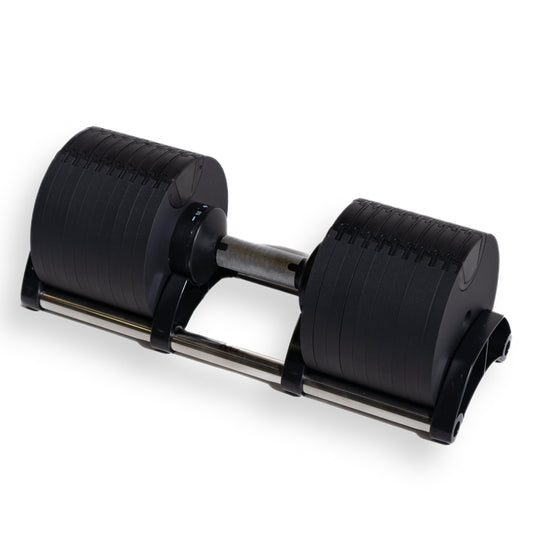
That's where adjustable dumbbells come in. A single set of high-quality adjustable dumbbells can replace a whole rack of fixed-weight dumbbells. Clever technology lets you switch the weight plates to adjust the weight you're using.
Minibeast's MB Pro Adjustable Dumbbell ranges from 10lb to 100lb. All major parts of this 100 lb adjustable dumbbell are made from cast iron and aluminum, with a thick handle for great grip, and allow you to seamlessly switch between weights with a simple turn of your wrist.
Adjustable Bench
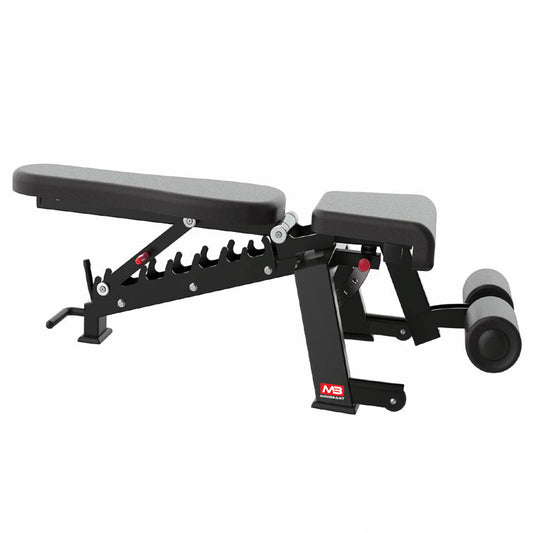
Another great choice for a home gym is an adjustable bench. Benches are useful for a lot more than a bench press. They can be used for full-body training.
Benches are fantastic when paired with dumbbells. You can do all kinds of push and pull movements, from presses to rows to flies to curls and beyond.
Minibeast's Adjustable Bench delivers rock-solid support and seamless versatility. A reinforced frame and high-density padding mean it can hold up and remain comfortable under high-intensity workouts.
You can also customize the colors to match the decor of your home gym.
For something a little more fancy, consider Minibeast's Adjustable Bench V2.

All-In-One Home Gym
Instead of buying individual pieces of equipment, you could always just buy an entire home gym at once.
No, seriously.
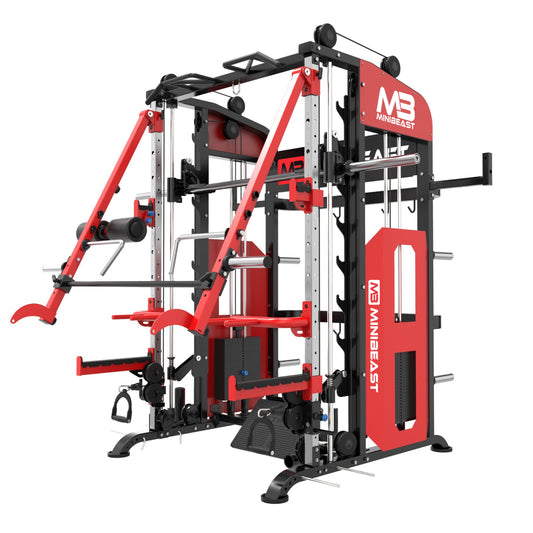
Minibeast's Ultimate All-In-1 Total Home Gym supports hundreds of exercises in a single compact machine. There's a pulley system, power rack, pull-up bar attachment, leg press, smith machine... and much, much more.
And all that fits into a single parking space.
What about cost? Based on our earlier conservative estimates, this all-in-one home gym machine would pay for itself within a few years. Compared to the more expensive estimates, it'd pay for itself within months, especially if you get it on sale — like it is this spring.
Conclusion
Home gyms offer a number of benefits. You can pursue your fitness goals in peace and privacy. Choose exactly what equipment to have, where to put it, and when to use it.
Despite what you might think, home gyms are also a great way to save money. Over time, the cost of a home gym is often lower than the cumulative annual fees spent at commercial gyms.
Frequently Asked Questions
How Much Does a Home Gym Normally Cost?
How much a home gym costs depends on how much and what kind of equipment you buy. One estimate put the average cost at around $1,000.
What Is the 3-3-3 Rule for the Gym?
The 3-3-3 rule is a popular workout guide. It involves three workouts each week, each one containing three exercises that target three muscle groups.
Is a Home Gym Worth the Money?
That depends on how much you spend on the gym compared with how much you'd spend on your home gym. For many people, a home gym is worth the money in the long-term. In the long-term, the average cost of a home gym is generally lower than the average cost of going to the gym.
Keep Reading: The 8 Best Supplements for Muscle Growth in 2026
--
Minibeast believes that everyone has the power to evolve into their best self. From state-of-the-art fitness equipment to comprehensive training programs, our brand is built for those who take their goals seriously. Through The Heart of Minibeast, 5% of every order helps feed families in need and support community programs. Get the latest workout tips, product updates, and fitness content by following us on Instagram, Facebook, YouTube, and TikTok.
–
These statements have not been evaluated by the Food and Drug Administration. These products are not intended to diagnose, treat, cure, or prevent any disease. The information provided on this website is for informational purposes only and is not intended as a substitute for professional medical advice, diagnosis, or treatment. Always seek the advice of a qualified healthcare provider with any questions you may have regarding a medical condition or before starting any new diet, exercise program, supplement, or using any fitness equipment or apparel. By using this site and its products, you acknowledge that you do so at your own risk. Use all products only as directed and discontinue use immediately if discomfort or adverse effects occur.