13 Exercises That Burn the Most Calories

Doing the right exercises can make the difference between meeting your fitness goals and falling short. We break down some of the most efficient exercises to help you burn calories in both the short- and long-term.
Key Takeaways
- Physical activity is crucial for overall health and is central to weight loss.
- Weight loss is fundamentally about burning more calories than you consume.
- High-intensity exercises, like running or HIIT, are often the most efficient at burning calories.
- More moderate exercises, like jogging, walking, or slower cycling, can often be maintained for longer, leading to high overall calorie burn.
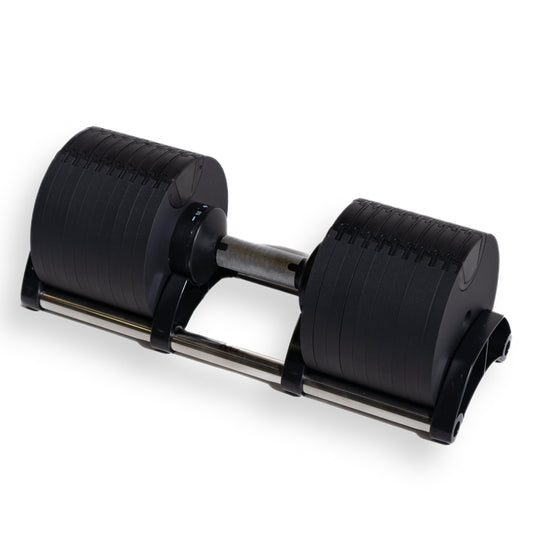
See More: When Should I Increase My Dumbbell Weight?
Exercises to Burn Calories and Lose Weight
Carriejune, founder of Minibeast, says:
“If you’re short on time, high-intensity exercises can be an efficient way to burn calories. On the other hand, moderate-intensity exercises can often be done for longer, which can lead to a higher overall calorie burn.”
Pretty much everything you do burns calories. In fact, our bodies burn the most calories just existing at rest. Exercise often accounts for just 5-15% of our total calorie burn.
But what if you want to burn more calories?
Not all exercises are made equal. Some burn more calories per hour than others.
You probably know this already. Just think about how tired you feel after a five-minute walk compared to a five-minute sprint.
If you're trying to build an effective weight loss program, or just want to support your overall health, it's important to know what exercises generally burn more calories.
That way, you can incorporate efficient exercises that you personally like, and which are aligned with your personal fitness goals. There's no single perfect exercise. But there are plenty of fantastic options, some of which you may never have considered.
We'll cover all of these options, from running and cycling to more exercises with hidden benefits, like stair climbing and elliptical training.
What Affects Calories Burned
First, it's important to note that two people could do the exact same exercise and burn a completely different number of calories.
That's because several factors influence calorie burn.
Body weight is a big one. Larger individuals tend to burn more calories during exercise. It takes more energy to move a larger mass.
People with more muscle mass also tend to burn more calories. Muscle tissue requires more energy to sustain than fat tissue. This simple fact is why resistance training is an important part of many professional fitness routines, even if your main goal isn't actually building strength.
Another important factor is your fitness level. Beginners often burn more calories during physical activity compared to advanced athletes, simply because their bodies are less efficient.
Other factors include your heart rate, age, the duration of your workout, and the intensity of your exercise.
Because so many things can affect the calories a particular exercise burns, experts often provide estimates for calories burned as general ranges. Your individual results may vary. That's absolutely normal.
Fundamentals of Weight Loss
Why does pushing for maximum calorie burn even matter?
Well, weight loss is fundamentally about burning more calories than you consume. That's called a calorie deficit.
Increasing your calorie expenditure, such as through exercise or fat-burning supplements, is one way to support a calorie deficit.
Your diet is another way. It's also arguably the more important of the two. As Minibeast founder Carriejune says, "Diet is nearly 70% of our results."
Ultimately, the key is consistency. Many people achieve long-term success by finding a sustainable fitness routine. That means finding efficient, effective exercises that you actually like doing.
Experts often recommend aiming for 150 minutes of moderate aerobic exercise per week.
High vs. Low Impact
One more thing to consider is the impact of a particular exercise.
Some exercises, like running, are considered high-impact. That means they put more stress on your joints.
Other exercises, like swimming and cycling, are considered low-impact exercises. That can make them great options for people with joint issues or those who are just starting their fitness journey.
Bonus: Does Having Muscle Really Burn Body Fat?

13 Best Cardio Exercises (and More) for Calorie Burn
#1. Running
Running is one of the most popular cardio exercises for good reason. It's incredibly simple to do. Pretty much anyone can step outside and start running.
Running is also really efficient for burning calories. For many people, running will be the easiest way to burn the most calories per hour.
Of course, the number of calories you burn depends on how long and fast you run.
At a basic jog, you might burn around 476 calories in an hour. Keep up 6 mph for an hour, and you might burn around 680 calories. Sprinting at 10 mph, meanwhile, can burn over 1,000 calories per hour.
Need clothes that are running-ready? Shop our collection of scrunch leggings that leave your booty looking its best!
#2. Jumping Rope
The humble jump rope is a lot more than a kid's toy. There's a reason so many fitness pros, like boxers, dedicate hours to jumping rope.
Using this simple tool requires your whole body, from your legs to your core to your arms. Try it, and you'll quickly see how intense it can be.
Typically, jumping rope burns around 575-600 calories per hour.
#3. Swimming
Running and jumping rope are both high-impact exercises. They can be quite intense on your joints.
For something a little easier on the body, consider swimming. Easier doesn't mean lower calorie burn, though. Swimming is still a fantastic whole-body workout that can burn calories at a serious rate.
An hour of casual swimming might burn around 476 calories, similar to jogging. Up the intensity and you might be able to increase your calorie burn. Thirty minutes of swimming can burn between 198 and 294 calories.
#4. Cycling
Cycling is another fantastic low-impact exercise. If you have a bike, you get the added benefit of exploring your area. Alternatively, you can use a stationary bike.
In general, cycling burns between 380 and 816 calories per hour. The specific number often depends on your intensity.
Cycle for 12-13 mph, and you might burn around 544 calories per hour. Up that to 16-19 mph, and you can burn 816 calories per hour.
#5. Rowing
Rowing is a high-intensity, full-body workout. If you don't have access to an actual boat, try using a rowing machine in the gym. It offers additional fitness benefits, too, targeting your legs, back, core, and arms.
Rowing generally burns 349-714 calories per hour, depending on intensity. But rowing can exceed 800 calories per hour in some cases.
#6. Walking
Let's take a step back. Sometimes the best exercises are the simplest.
Take walking. It's pretty much the simplest exercise possible.
A brisk, 30-minute walk can burn 160-240 calories. That's similar to some of the other exercises on this list.
Another benefit of walking is that many people, especially beginners, can keep it up for longer than more intense exercises. Sustaining moderate activities, like walking, for longer can actually burn more calories at the end of a workout.
#7. Hiking

Walk along a paved road and up a steep rocky hill, and you'll quickly see which is more difficult. The terrain and incline on which you walk can influence how many calories you burn while walking.
Hiking can also help engage your lower-body muscles, like your glutes. If you can't get outside, try switching from a normal treadmill to an incline treadmill to increase the difficulty and calorie burn.
#8. Elliptical
Elliptical machines simulate simple movements like running, walking, or even stair-climbing. You don't actually lift your feet, which makes them a fantastic low-impact option.
Spend an hour on the elliptical, and you might burn around 240 calories.
#9. Aerobic Dance
Who says cardio can't be fun? If you want something a little more creative, consider aerobic dance. It's a great way to improve coordination, develop a hobby, and meet new people. The continuous movement is great for keeping your heart rate elevated and calorie expenditure high.
#10. Stair Climbing
Stair climbing, either on actual stairs or a Stair Master machine, is famously fantastic for building lower-body muscles. But it's also an efficient way to burn calories. You can try taking two steps at a time or add resistance bands to up the difficulty.
#11. Calisthenics
Calisthenics is also called bodyweight training. It essentially means working out with only your body weight. Think exercises like push-ups, squats, lunges, sit-ups, and so on. Compound exercises like these can burn more calories than isolated exercises, because they engage more muscle groups.
These are great ways to build strength and even muscle mass. They can also be efficient calorie-burners. Another benefit is how accessible they are. You can do them practically anywhere, without any specialized equipment.
#12. High-Intensity Interval Training
High-intensity interval training, or HIIT, is one of the most efficient ways to burn calories. The idea is to combine short bursts of intense effort with minimal rest periods. Doing HIIT can burn 390-580 calories per hour.
However, you probably won't do HIIT for a whole hour. Higher-intensity exercises usually have shorter durations to avoid burnout or injury. HIIT workouts can actually be as short as 10-15 minutes.
Examples of typical HIIT exercises include jump squats and burpees. Burpees can burn 8-14 calories per minute.
Higher-intensity exercises can burn more calories per minute than lower-intensity exercises. That makes them extremely useful for people with limited time.
HIIT can also enhance calorie burn for 24 hours after you finish exercising. To understand that, we need to discuss the final entry in our list.
#13. Strength Training
Strength training might not seem like the obvious choice when it comes to burning calories. After all, cardio exercises typically burn more calories than weight training, at least when you compare session to session.
However, strength training has some additional benefits. We already mentioned how muscle mass requires more calories to maintain than fat mass. Building muscle through anaerobic exercise can therefore enhance your overall calorie expenditure.
There's another thing, too. After a strength training or HIIT workout, your body has to recover. That takes energy.
It also means your body must consume more oxygen than normal. This excess post-exercise oxygen consumption, or EPOC, can enhance calorie burn up to 15% in the hours after you complete your workout.

How to Build a Calorie-Burning Workout Program
Ideally, your workout program will balance cardio and resistance training in a way that helps you reach your specific fitness goals.
Finding that balance can be difficult. One great way to achieve it is by enrolling in a professionally designed workout program.
Take Minibeast's 8-Week Workout Challenge, for example. You get access to multiple workout programs, custom calories and macros, a private support group, example meal plans, and much more.
Hundreds of thousands of people have used this workout challenge to smash their fitness goals.
Conclusion
Exercise is an important way to support and enhance calorie burn and weight loss. It's also vital for overall health and wellness.
Certain exercises, like sprinting, jumping rope, and HIIT, burn more calories per minute, which can be helpful for people with little time. Other exercises, like walking and swimming, are lower-impact. Most people can do them for longer, which can mean greater overall calorie expenditure.
Frequently Asked Questions
What Exercise Burns the Most Calories in 30 Minutes?
High-intensity exercises, like HIIT, sprinting, or jumping rope, generally burn the most calories in short periods of time.
How to Burn 700 Calories in 1 Hour?
To burn 700 calories in an hour, you'll need to sustain a higher-intensity exercise for a long period of time. That can be tricky, but it's doable. Running, cycling, swimming, and rowing may all burn 700 or more calories if done intensely enough for a full hour.
How to Burn 1,000 Calories in 30 Minutes?
Many people won't be able to burn 1,000 calories in just 30 minutes. Experts usually recommend aiming for a more moderate, sustainable workout program that burns calories over time. However, certain individuals may be able to burn 1,000 calories in 30 minutes with an extreme HIIT workout.
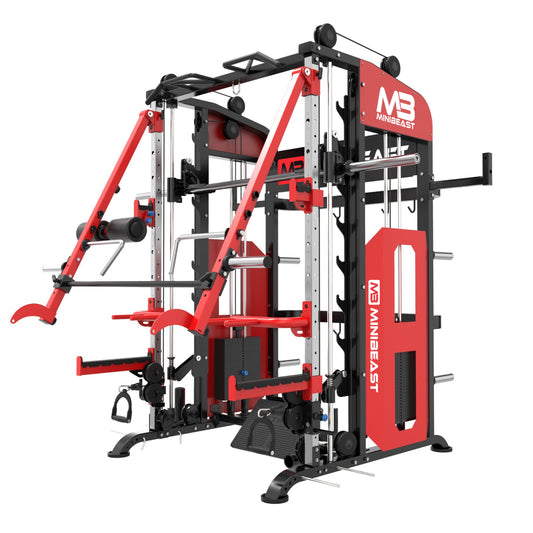
Keep Reading: The Best Gym Equipment to Help Target Belly Fat
--
Minibeast believes that everyone has the power to evolve into their best self. From state-of-the-art fitness equipment to comprehensive training programs, our brand is built for those who take their goals seriously. Through The Heart of Minibeast, 5% of every order helps feed families in need and support community programs. Get the latest workout tips, product updates, and fitness content by following us on Instagram, Facebook, YouTube, and TikTok.
–
These statements have not been evaluated by the Food and Drug Administration. These products are not intended to diagnose, treat, cure, or prevent any disease. The information provided on this website is for informational purposes only and is not intended as a substitute for professional medical advice, diagnosis, or treatment. Always seek the advice of a qualified healthcare provider with any questions you may have regarding a medical condition or before starting any new diet, exercise program, supplement, or using any fitness equipment or apparel. By using this site and its products, you acknowledge that you do so at your own risk. Use all products only as directed and discontinue use immediately if discomfort or adverse effects occur.