5 Ways to Fit a Workout Into Your Daily Schedule

Fitting a workout into your daily schedule is easier than it might seem. We break down some of the best techniques to help you start and stick with your fitness routine.
Key Takeaways
- Regular exercise is important for overall health and well-being.
- One way to incorporate workouts into your daily routine is by supporting motivation, such as by choosing enjoyable activities and exercising with a friend.
- Another way is by working on your consistency, such as with habit stacking and progress tracking.
- A professionally designed workout program is a great way to integrate workouts into your normal routine.
See More: How Much Does the Bar Weigh at the Gym?
How to Incorporate Exercise Into Your Everyday Life
Carriejune, founder of Minibeast, says:
"There are plenty of ways to fit exercise into your daily routine, from small tricks to reduce friction and increase motivation to dedicated workout challenges that provide everything you need for a tailored fitness routine."
You probably know how important regular physical activity is for your overall health. But it's one thing to know that, and quite another to incorporate exercise into a busy schedule.
If you're struggling to find the time to work out, don't worry. You're not alone. Plenty of people are going through the exact same struggle.
There are plenty of things that might get in the way of exercise. Some are external, like your gym being too far away. Others are internal, like motivation.
Fortunately, there are plenty of tips and tricks that can help you overcome these barriers. The key is crafting a fitness routine that works for you. With the right approach, you should be able to be able to fit some kind of workout into your schedule.

Potential Health Benefits of Regular Exercise
Before we dive into those techniques, it's worth reminding ourselves why we're exercising in the first place. After all, if you know exactly why you're doing something, it becomes a lot easier to push yourself to actually do it.
Well, regular exercise provides a wide range of potential health benefits. It can lower your resting heart rate and blood pressure, improve mental clarity, boost mood and self-esteem, enhance sleep quality, help with weight management, and much more.
Specific kinds of exercise can also provide specific benefits. For example, strength training can help build muscle, which can be both functional and aesthetic.
Bonus: 15 Foods to Eat if You Want a Bigger Booty
Building an Exercise Routine
So, it's clear that regular exercise is beneficial. But what, exactly, counts as "regular exercise?"
That seemingly simple phrase is actually quite vague. In general, experts recommend aiming for at least 150 minutes of moderate-intensity physical activity every week.
If you think about it, that's quite a reasonable goal. Five thirty-minute workouts a week would let you hit it.
However, you shouldn't let perfect be the enemy of good. Even short workouts, like a 10-minute circuit, count as exercise. They are better than nothing.
Shorter workouts can actually be a great place to start for beginners. If you've never exercised and you try to take on too much at once, you might burn out or get injured. Instead, it's often worth starting small and building consistency before moving up to more intense workout routines.
Whether you're a beginner or a pro, it's always important to start your workout with a dynamic warm-up. That might include movements like leg swings, high knees, and arm circles, to help get your body moving and prime it for exercise.
That doesn't need to take too much time. A five-minute dynamic warm-up is often enough.
What you actually do in your workout itself depends on your goals.
For example, if you're circuit training, you cycle through various exercises. You might try to complete two sets of 10-15 reps for each exercise.
Strength training looks a little different. At first, you generally start with lower weights and high repetitions, similar to circuit training. But as you progress, you generally aim for higher weights and lower reps, with the usual range being 8-12 reps.
Some strength training routines break up individual workouts based on specific muscle groups. You might work your upper and lower body on different days. However, a quality strength training routine should generally target all of your major muscle groups twice per week.
Rest and recovery are also key. Make sure to take at least a couple of rest days per week. You can do active recovery exercises, like yoga, on those days.
If you want more details on what to do in each of your strength training workouts, a professional workout program is a great place to start. More on that later.

5 Ways to Fit Exercise Into Your Daily Routine
We've established the benefits of exercise and covered some things to keep in mind when exercising. But the hardest part is often starting to exercise in the first place.
Plenty of people have crafted the perfect workout plan only to drop out a few weeks in.
That can happen for all manner of reasons. There are some tricks you can do to prevent it, stick with your fitness journey, and reach your fitness goals.
#1. Make Things Easy
Exercise is hard. That's kind of the point. You want to challenge your body so it will adapt, grow, and improve.
However, that doesn't mean you can't make exercise easier. You can reduce any friction that might make you more likely to stay in bed instead of hitting the gym.
One great example is packing your gym bag the night before. You can also pick your gym fit the day before. That way, instead of having to figure everything out while groggy, you can grab your bag and go. Preparing for the gym the night before is a fantastic way to reduce friction and set yourself up for success.
Another example is choosing a gym close by. Research has found a correlation between proximity to the gym and frequency of workouts. In other words, if you're closer to your gym, you're probably going to go more often.
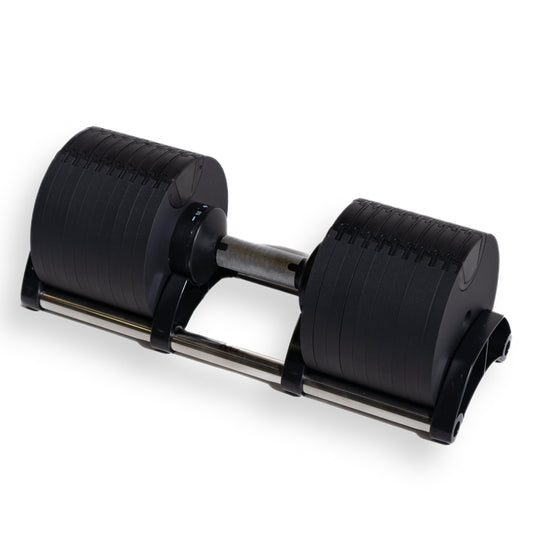
Of course, the closest gym is a home gym. If you have the space (and hate a commute), you might consider building a gym at home. That doesn't have to be fancy. A set of adjustable dumbbells is enough for a full-body workout.
#2. Schedule Exercise
It's all too easy to put off exercise. Something might come up. You might feel tired.
One way to prevent this is by scheduling your workouts as if they were appointments. Put them in your calendar app and treat them as a firm commitment.
Another trick is called habit stacking. It's when you attach a habit you want to build, like going to the gym, to one you already do, like getting a morning coffee.
Long workouts can sometimes feel intimidating. A trick that might help is setting for yourself a minimum workout, after which you can call it a day. For example, you might tell yourself to do the first 15 minutes, after which you can go home if you really aren't feeling it. Chances are, by the time you're in the swing of things, you'll be able to finish the workout.
#3. Focus on Enjoyment
At times, exercise might feel like a pain. When push comes to shove, objective reasons for exercising, like health, might not feel overly motivating.
It's important to try to keep a positive mindset. Think about the benefits of your workouts. Also think about the things you enjoy about exercising, such as the way you feel afterward.
As you might imagine, that's a lot easier if you actually enjoy the activities you do. Picking activities you enjoy is an easy way to up your chances of staying consistent.
Another trick is finding a workout buddy. Bringing along a friend can turn a difficult workout into a fun hang, boosting motivation. Your workout buddy can also help keep you accountable.
#4. Keep Track of Progress
A workout buddy is a great accountability tool, but you shouldn't rely on other people to keep you accountable. You need to do it for yourself.
That's one reason it's important to track your progress. If you're feeling stuck, you can look back to see how far you've come. You might also be able to identify areas that need more work, which could help you overcome that plateau.
With a detailed log of your progress, you can also set yourself new goals. A new goal is a great way to regain lost motivation during workouts.
#5. Join a Workout Challenge
A professionally designed workout challenge is a great way to help you tackle all of the above (and more) at once. You get training and advice to overcome knowledge obstacles, workout routines to help you plan your week, and clear goals for motivation.
Minibeast's 8-Week Workout Challenge is a great example of this. You get access to five full workout programs, customized calories based on your body composition, a 24/7 private support group, example meal plans, demonstration videos and progress check-ins, prizes, and much more.
That's why hundreds of thousands of people have used this challenge to tackle their fitness goals.
Conclusion
There are plenty of ways to incorporate exercise into your daily routine. Try to reduce friction, schedule your workouts, choose activities you enjoy, exercise with a friend, and track your progress. Joining a workout challenge is a great way to do all of these things and more.
Frequently Asked Questions
What Is the 3-3-3 Rule in the Gym?
The 3-3-3 rule is a simple strength training framework. It calls for doing three workouts per week. Each workout should involve three exercises, and each exercise should have three sets.
How to Incorporate Exercise In a Daily Routine?
There are plenty of ways to incorporate exercise into your daily life. One way is to fit exercise into empty moments, like walking while on the phone or taking the stairs. Another way is to prioritize dedicated workouts, such as by joining a workout challenge.
Is Going to the Gym 3 Times a Week Too Much?
For most people, going to the gym 3 times a week is not too much at all. Quite the opposite. Many people find going to the gym 3 days a week to be a manageable training volume that allows for noticeable progress.
Keep Reading: Building Muscle in a Caloric Deficit: What You Need to Know
--
Minibeast believes that everyone has the power to evolve into their best self. From state-of-the-art fitness equipment to comprehensive training programs, our brand is built for those who take their goals seriously. Through The Heart of Minibeast, 5% of every order helps feed families in need and support community programs. Get the latest workout tips, product updates, and fitness content by following us on Instagram, Facebook, YouTube, and TikTok.
–
These statements have not been evaluated by the Food and Drug Administration. These products are not intended to diagnose, treat, cure, or prevent any disease. The information provided on this website is for informational purposes only and is not intended as a substitute for professional medical advice, diagnosis, or treatment. Always seek the advice of a qualified healthcare provider with any questions you may have regarding a medical condition or before starting any new diet, exercise program, supplement, or using any fitness equipment or apparel. By using this site and its products, you acknowledge that you do so at your own risk. Use all products only as directed and discontinue use immediately if discomfort or adverse effects occur.