How to Work Your Glutes With Squats: Variations & More

Squats are one of the best exercises to work your glutes. But that's only true if you know how to do them correctly.
We break down what makes squats so effective, the form needed to target your glutes, and several fantastic squat variations to help you maximize your glute development.
Key Takeaways
- Squats are a good exercise for building glute size and strength.
- Make sure to squat with proper form, which means bracing your core, preventing your knees from collapsing inward, and squatting deep.
- There are many helpful squat variations, like Bulgarian split squats and goblet squats, which can provide additional benefits.
- For the best results, incorporate squats into a wider workout and diet program.
See More: Can I Really Use Coffee As a Pre-Workout?
Squats and Glute Growth
Carriejune, founder of Minibeast, says:
"Squats are a great way to build your glutes. To get the results you want, you need to know how to do them properly."
Squats are one of the most iconic and widely used lower-body exercises. There's a good reason for that. Few compound exercises are as effective at building lower-body muscles, including your glute muscles, as squats.
Of course, that's dependent on you doing squats with proper form. We'll explain exactly how to do that to help you ensure your squats work how they should.
The humble bodyweight squat is also just the tip of the iceberg. There are all kinds of squat variations. Adding them to your workout program can supercharge your glute development even further.
Before we get to those, though, we need to break down some basic squat mechanics.

Why Squats Work
Squats are one of those exercises that are helpful for both functional and aesthetic reasons.
The aesthetic reasons are pretty self-evident. Squats are great for building lower-body muscles, especially the glutes. If you're trying to build a bigger, more defined booty, squats are your friend.
If you think about the basic movement of a squat, the functional benefits might also become more evident. Sitting, standing, lifting, climbing stairs... all of these basic, fundamental movements are related to the squat.
Squats can therefore help you build the functional strength needed for those real-world movements. They recruit multiple muscle groups, working your glutes, quads, inner thighs, core muscles, and even your hamstrings.
Gluteus Maximus
At the center of the squat are your glute muscles. There are three of them, and the gluteus maximus is the largest.
Your gluteus maximus is mostly responsible for the hip extension that happens during squats. In other words, it's the muscle that actually drives you upright from the squatting position, especially at the end of the movement when your hips drive forward.
Bonus: Can Shapewear Help Reduce Belly Fat?
How to Increase Glute Activation in Squats
If you've ever squatted without thinking about proper form, you might wonder whether your glutes were really working so hard. How you perform a squat affects what muscle groups are recruited or targeted.
Take your stance, for example. If you keep a narrow stance, with your feet closer together, your quads do more of the work. A wider stance, with your toes slightly externally rotated, can lead to greater glute activation.
Think about your core, too. Keeping your core muscles braced helps maximize glute activation. It also protects your lower back, especially if you're squatting with large weights.
Your knees also play a role. Keep your knees forward and hips backward, preventing your knees from collapsing inward. If you're holding weights, keep your elbows tucked.
Shallow vs. Deep Squats
Squat depth also plays an important role. Shallow squats, or half squats, cut the range of motion short. You lose out on the glute activation that happens during full hip flexion, and target the quads more. On the other hand, deep squats recruit your glutes more completely and can therefore increase glute activation.
How deep is deep enough? Experts generally recommend squatting until your thighs are parallel to the floor.
There's a caveat. You might not be flexible enough to go so deep. If that's the case, just go as deep as you can, and work on your flexibility and mobility separately. Pushing yourself beyond what your body can handle is a recipe for becoming injured.

Progressive Overload
You could squat with absolutely perfect form and still not build muscle effectively if you don't follow progressive overload. Progressive overload means continually challenging your muscles, so they are forced to continue adapting and growing stronger and larger. Once your glutes become adapted, you need to up the challenge to avoid plateauing.
That often means increasing the weight you squat. It can also mean performing more reps.
You can increase difficulty in other ways, too. A resistance band is one useful method. Placing a band around your knees can force you to push outward during the squat, emphasizing hip abduction and increasing glute activation.
The time your glutes spend under tension also matters. You can increase the time your glutes are under tension by slowing down your descent into a squat. That forces them to work across the whole movement, rather than letting gravity help during the first part.
Squat Variations to Build Bigger Glutes
Once you've mastered the basic squat, you can start exploring some of the many squat variations out there. Each variation has specific benefits. They can be really helpful for addressing different aspects of glute development and strength.
Sumo Squat
Sumo squats are fantastic for glute growth. The wider stance helps increase hip abduction and glute activation.
Stand with a wide stance, with your toes pointed outwards. Lower yourself, pushing your hips backward, until your thighs are parallel to the floor. Push through your heels to stand.
Goblet Squat
With a goblet squat, you hold a weight against your chest. That helps keep you upright, encourages you to squat deep, and incorporates your upper body, too. Goblet squats are a great way for beginners to learn proper form.
Split Squat
Split squats work each leg individually. That's a great way to increase the challenge. Split squats also force you to work on your balance and stability, too.
Stand in a staggered stance, with one foot forward. Lower your back knee toward the floor, keeping your front knee stable. Don't let that front knee fall to either side or too far forward. Then push back up through your front heel.
Bulgarian Split Squat
Bulgarian split squats help improve balance and stability. You elevate your back foot on a bench or sofa. Lower yourself with control, keeping your torso upright.
Jump Squat
Jump squats help train the explosive strength needed for functional and athletic movements. Instead of pushing yourself back up to standing, you drive upwards into a jump.
Smith Machine Squat
A barbell is a great way to add weight to a squat. But it can be tricky to balance, especially for beginners. The Smith machine is a fantastic alternative.
Because the Smith machine locks its bar onto a fixed track, you don't need to worry about balance. That lets you squat greater weights more safely. This is also helpful for athletes returning from injury.
Position the bar across your upper back. Place your feet a little forward of the bar. Then squat as normal.
Belt Squat
The belt squat is another way to add weight to a squat. You attach the weight to a belt that goes around your hips, instead of loading it onto your shoulders. That allows you to squat heavy weights without putting so much pressure on your upper body and spine.
You'll need to stand on a platform so that the weights attached to your belt don't hit the floor when you squat.
Workout Challenge to Build Glutes
Squats are amazing glute exercises. But they aren't the only ones. There are also hip thrusts, Romanian deadlifts, walking lunges... The list goes on.
Building a holistic, effective workout program can be tricky. A professionally designed workout challenge program is a great shortcut that can kickstart your fitness journey.
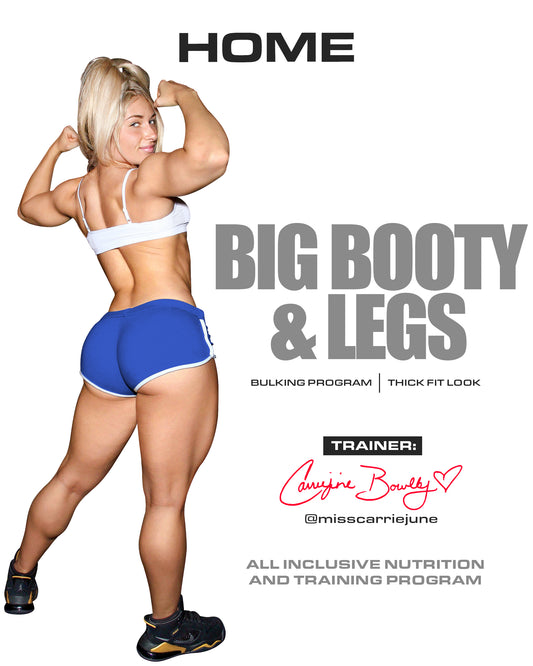
Minibeast's Standard "Big" Booty & Legs Workout Program is specifically designed to help you put on as much booty and leg mass as possible in 8 weeks. You get access to 8 weeks of workouts, Carriejune's personal tips for developing your glutes, tailored meal plans, example diets, and much more.

Conclusion
Squats are a fantastic way to work your glutes, as long as you perform them correctly. There are plenty of squat variations that can further enhance your glute development. Squats are often most effective when incorporated into a wider workout program.
Frequently Asked Questions
Will 50 Squats a Day Tone My Bum?
50 squats a day will help strengthen and firm your glutes, and is certainly better than nothing. But that alone probably won't be enough to see dramatic results. Consider adding resistance, performing squat variations, or enrolling in a professionally designed workout program.
What Is the Best Glute Exercise?
Many people consider squats to be the best glute exercise. Other contenders include split squats, hip thrusts, and Romanian deadlifts.
Do Squats Make You Curvier?
Squats can help you grow your glute muscles, which could help you look curvier. Healthy eating, progressive overload, and genetics also play a role.
Keep Reading: Can You Lift Weights Every Day? What The Science Says
--
Minibeast believes that everyone has the power to evolve into their best self. From state-of-the-art fitness equipment to comprehensive training programs, our brand is built for those who take their goals seriously. Through The Heart of Minibeast, 5% of every order helps feed families in need and support community programs. Get the latest workout tips, product updates, and fitness content by following us on Instagram, Facebook, YouTube, and TikTok.
–
These statements have not been evaluated by the Food and Drug Administration. These products are not intended to diagnose, treat, cure, or prevent any disease. The information provided on this website is for informational purposes only and is not intended as a substitute for professional medical advice, diagnosis, or treatment. Always seek the advice of a qualified healthcare provider with any questions you may have regarding a medical condition or before starting any new diet, exercise program, supplement, or using any fitness equipment or apparel. By using this site and its products, you acknowledge that you do so at your own risk. Use all products only as directed and discontinue use immediately if discomfort or adverse effects occur.