Does Creatine Make You Gain Weight?

Creatine is fantastic, but people often complain that it causes weight gain. That depends on how you take it and what type of creatine you take.
We explain how creatine actually works to help you figure out how to avoid unnecessary weight gain while still supporting your fitness goals.
Key Takeaways
- Creatine acts as a short-term energy source for your muscles.
- Research has found that it can enhance muscle gains when combined with resistance training.
- Some people find that creatine causes water retention, which can result in weight gain.
- High-quality creatine is formulated to avoid causing water retention.
See More: How to Use Your Acupressure Mat
Creatine and Weight Gain
Carriejune, founder of Minibeast, says:
"Some people gain water weight when they start using creatine, because it can pull water into muscle cells. High-quality creatine is designed to avoid this."
Creatine supplements are a great way to support your workouts. Research suggests that creatine can enhance the increases in muscle strength and mass that come from proper resistance training.
However, there's a common belief that taking creatine will make you gain weight. That may be true, but it's not what you might think.
When you take enough creatine, your muscle cells take in more water than before. This increased water retention can cause your body weight to increase a little. It's also associated with other side effects, like bloating.
In the long-term, building muscle often results in weight gain. After all, muscle is heavy!
You might have noticed we didn't mention fat. There's no real evidence suggesting that creatine causes people to gain body fat.
Not all creatine is created equal. High-quality creatine supplements are designed to avoid water retention and bloating.
To understand how that's possible, we need to explain how creatine works.
Bonus: Can You Build Muscle and Burn Fat at the Same Time?

Understanding Creatine
Creatine is one of the most popular workout supplements around. It's widely used by athletes and casual lifters alike to support muscle growth and strength.
Your body can make creatine. It's formed of three amino acids. And creatine itself is a component of ATP, the molecule your body uses to produce energy.
During exercise, your body burns through its stores of ATP. But creatine can help your body replenish those stores.
Potential Benefits of Taking Creatine
In effect, creatine acts like a short-term energy boost for your muscles. That boost theoretically helps you push that little bit harder during a workout, like during the final reps of a challenging set.
Research suggests that creatine can support muscle growth. For example, one study found that creatine, combined with resistance training, increased muscle hypertrophy.
Studies have also found that creatine can enhance muscle strength when combined with resistance training. One study compared participants who took creatine in combination with resistance training with those taking a placebo. Participants using creatine experienced significantly larger increases in their squat and bench press.
How Creatine May Cause Weight Gain

Creatine is often associated with various side effects. The most common are stomach issues, bloating, and weight gain.
These issues often arise because of the way creatine is often taken. Traditionally, creatine supplementation starts with something called the loading phase. It involves taking large amounts of creatine per day for five to seven days.
That process is supposed to saturate your muscles with creatine. Once the loading phase is over, people go down to the usual daily dose of 3-5 grams.
However, taking such intense amounts of creatine can also intensify potential side effects. One of those is rapid weight gain.
Water Retention (Water Weight)
Creatine is osmotically active. When it's inside your muscle cells, it can pull water inside.
How much water is retained varies based on a few factors, including the amount of creatine taken. But people often experience a few pounds of weight gain.
This water is stored inside your muscle cells. Some people like how it makes their muscles appear fuller.
Interestingly, some studies have found that creatine does not cause water retention. Or at least, water retention might not be permanent. One 2022 review noted that several studies suggest creatine does not change the total volume of water in the body relative to muscle mass in the long-term.
Increased Muscle Mass
As we mentioned, creatine supplementation is associated with enhanced muscle gains. As your muscles grow, they naturally become heavier. In that sense, you might say that creatine causes weight gain.
Where to Get Creatine

There's no shortage of options when it comes to creatine supplements. But if you're worried about potential side effects, weight-related or otherwise, consider choosing a high-quality formula.
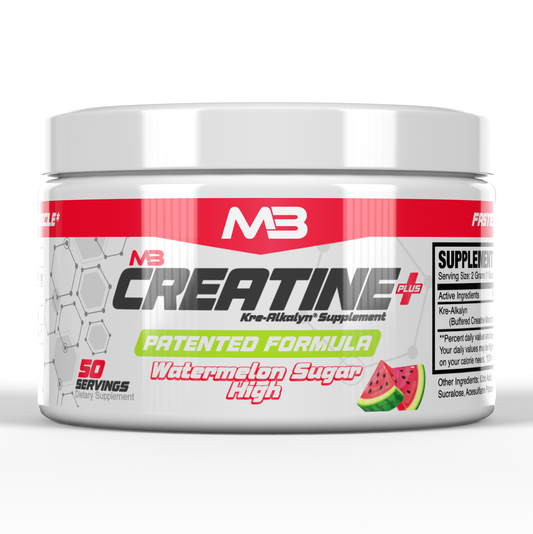
For example, Minibeast's MB Creatine Plus+ uses a patented, pH-buffered form of creatine monohydrate. It's designed to deliver creatine to your muscle cells without water retention, cramping, or stomach issues.
Conclusion
Creatine is a popular workout supplement that may support muscle growth. People often report gaining a little weight when they start using creatine, which is often attributed to water retention. High-quality creatine is designed to provide the potential benefits without water retention or stomach issues.
Frequently Asked Questions
Can Creatine Make You Gain Belly Weight?
Creatine doesn't cause you to gain belly fat. Some people experience weight gain when they start using creatine, but that is associated with increased water retention. The water is stored in your muscle cells, not your belly.
Does Creatine Make You Puffy at First?
Some people notice mild puffiness when they start using creatine, especially if they follow a loading phase. It's caused by water retention in muscle cells. High-quality creatine is designed to avoid causing water retention.
Is Creatine OK to Take Every Day?
Yes. In fact, experts generally recommend taking it every day, because your muscles need to build up and maintain their stores of creatine for it to be effective.
Keep Reading: How to Easily Add Electrolytes to Your Water At Home
--
Minibeast believes that everyone has the power to evolve into their best self. From state-of-the-art fitness equipment to comprehensive training programs, our brand is built for those who take their goals seriously. Through The Heart of Minibeast, 5% of every order helps feed families in need and support community programs. Get the latest workout tips, product updates, and fitness content by following us on Instagram, Facebook, YouTube, and TikTok.
–
These statements have not been evaluated by the Food and Drug Administration. These products are not intended to diagnose, treat, cure, or prevent any disease. The information provided on this website is for informational purposes only and is not intended as a substitute for professional medical advice, diagnosis, or treatment. Always seek the advice of a qualified healthcare provider with any questions you may have regarding a medical condition or before starting any new diet, exercise program, supplement, or using any fitness equipment or apparel. By using this site and its products, you acknowledge that you do so at your own risk. Use all products only as directed and discontinue use immediately if discomfort or adverse effects occur.