How Long Does Pre-Workout Stay in Your System?

Knowing how long your pre-workout sticks around in your system is just as important as knowing how quickly it takes effect. We break down the science behind common pre-workout ingredients to help you optimize your workout supplement timing.
Key Takeaways
- Pre-workout supplements are generally formulas designed to enhance athletic performance.
- They often contain stimulants like caffeine.
- Pre-workouts generally take effect within 30 minutes, and their effects can last a few hours.
- Some ingredients, like caffeine, can remain active for several hours, depending on factors like your metabolism.
See More: Should You Have a Protein Shake Before or After a Workout?
Understanding Pre-Workout
Carriejune, founder of Minibeast, says:
"Pre-workout's effects generally fade after a couple of hours, but certain ingredients can remain active for several hours after you take them. That's why it's so important to pay attention to the ingredients included in your pre-workout mix."
Millions of people around the world take pre-workout supplements to enhance their athletic performance.
As the name implies, you take pre-workout before exercise. The effects usually peak 30-60 minutes after taking it, just in time to help you push yourself to the next level.
Most pre-workout formulas contain a mix of ingredients, each designed to support or enhance your workout performance in a particular way. Some of these ingredients, like caffeine and beta-alanine, have discernible physical effects.
But how long do those effects last? And how long do these ingredients stay in your system?
There are plenty of reasons to want to know this. For one, stimulants like caffeine can interfere with your sleep, so it's worth knowing how long the caffeine in your pre-workout might stick around after you take it.
Fully understanding how different pre-workout formulas work, and how long they last, is a key step in optimizing your supplement and workout routine. We'll break down the science behind pre-workout to help you do just that.

Potential Benefits of Pre-Workout
As we mentioned, most pre-workouts are a mix of many different ingredients. That's why they're also called multi-ingredient pre-workout supplements, or MIPS.
In a high-quality pre-workout formula, each ingredient is carefully chosen for its individual potential benefits. Together, the mix of ingredients is intended to support and enhance muscle endurance, blood flow, mental focus, energy levels, and more. Pre-workout can even reduce muscle soreness after exercise.¹
As a whole, pre-workout is intended to enhance exercise performance.
Research shows that pre-workout can do exactly that. For example, one 2025 review looked at two dozen studies of pre-workout. It concluded that pre-workouts were associated with enhanced endurance, strength, and energy.²
Common Pre-Workout Ingredients
Let's look at a few common ingredients and their individual benefits.
Many pre-workout supplements contain a stimulant. The most common stimulant used is caffeine. It's thought to provide an energy boost, enhance alertness, help delay fatigue, and even enhance muscle power.³
L-theanine, an amino acid, is sometimes included alongside caffeine to enhance mental focus.
Beta-alanine is another common ingredient. It's added to support muscle endurance and enhance exercise performance.⁴
Citrulline malate is often included to enhance athletic performance during high-intensity exercise. It helps boost nitric oxide levels, which, in turn, supports vasodilation, increasing blood flow.
Branched-chain amino acids, or BCAAs, are another fantastic ingredient. They support muscle endurance, help prevent muscle breakdown, and can reduce muscle soreness.⁵

Pre-Workout Timing
When you take pre-workout is important. As we mentioned, the general recommendation is to take pre-workout 30-60 minutes before exercise.
That's because it takes a little time for the ingredients to take effect. Most pre-workouts start to kick in within 15-30 minutes. But they might take a little longer to reach peak effects.
Caffeine, for example, usually reaches peak blood concentrations in 45-60 minutes. Nitric oxide production generally peaks 60-90 minutes after taking supportive ingredients like citrulline malate.
The exact timing depends on a few individual factors, including your metabolism. If you take pre-workout on an empty stomach, it may absorb faster and peak sooner.
Bonus: How Long a Gym Pump Lasts & How to Keep It
How Long Pre-Workout Lasts
That covers when the effects begin and peak. Now, how long do they last?
Pre-workout effects typically last 1.5-3 hours. But the specific duration depends on the ingredients.
Each ingredient has what is called a half-life. A half-life refers to the time it takes to reduce the concentration of a particular substance by half. In other words, the half-life of a substance refers to how long it sticks around in your body.
For example, caffeine's half-life averages 3-5 hours. So it can remain active in the body for 5 hours. That's why it's generally not a good idea to take a caffeinated pre-workout within 6-8 hours of bedtime.
On the other hand, beta-alanine has a half-life of about 25 minutes.
Caffeine is broken down in the liver by an enzyme called CYP1A2. Your liver function plays a significant role in how quickly you metabolize caffeine.
The duration of pre-workout's effects depends on your metabolism. If you metabolize these ingredients more slowly, they will stick around for longer.
Your body weight and body composition can affect how you metabolize stimulants, like caffeine. It may stay active for longer in individuals with higher body fat percentages.
Age also plays a role. Research suggests that older adults metabolize caffeine roughly 33% more slowly than younger adults.
Tolerance is also important. When you use something like caffeine regularly, you develop a tolerance and may need more to feel the same effects. A higher tolerance can also lead to your body processing and clearing caffeine more quickly.
Your hydration levels can also influence how quickly your body gets rid of waste products.
It's also worth noting that ingredients can be present in your body without causing noticeable effects. That's why we consider the half-life of a substance rather than the time it takes to eliminate it completely.
Where to Get High-Quality Pre-Workout

When picking a pre-workout, look out for research-backed ingredients like the ones we discussed above. Also consider what kind of effect you want.
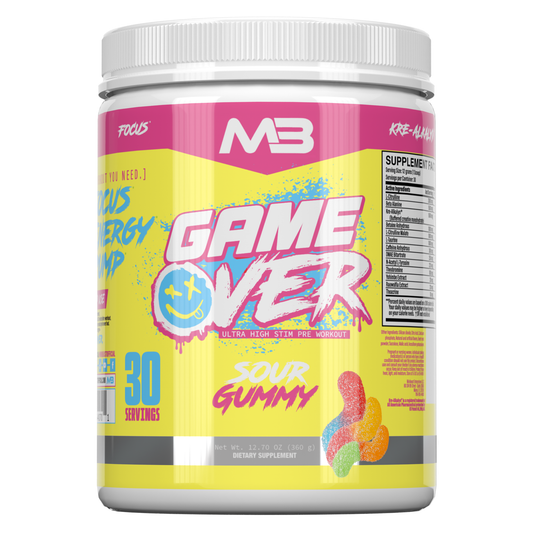
If you want a pre-workout that hits hard, consider a high-stim pre-workout like Minibeast's Game Over. It contains a high-stimulant blend to help you push through to the final rep.
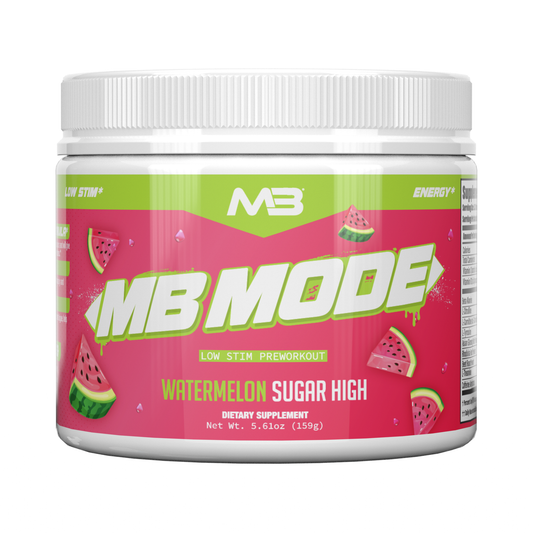
If you want the benefits of caffeine but are watching your caffeine intake, consider a low-stim pre-workout like Minibeast's MB Mode. It delivers enough caffeine for a steady lift, plus quality ingredients like L-theanine and beta-alanine.
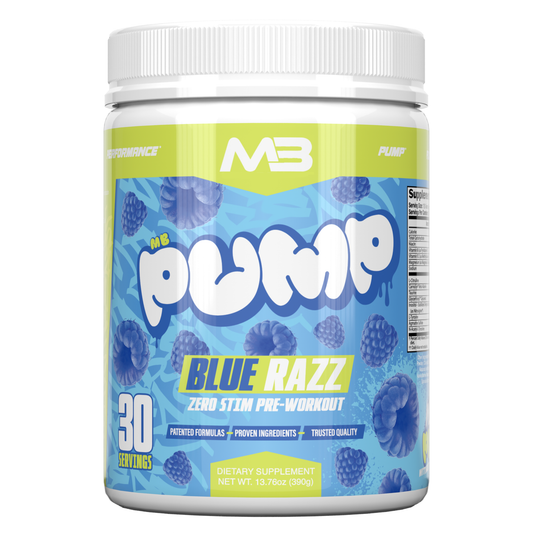
And if you want to exercise in the evening and need support without stimulants, get a stimulant-free pre-workout like Minibeast's MB Pump. It's carefully crafted to deliver laser focus and a proper pump without any stimulants, thanks to ingredients like L-citrulline, taurine, and niacin.
Conclusion
Pre-workout's effects generally start within 30 minutes, peak within 60 minutes, and can last a few hours. How long the ingredients stay in your system depends on various factors, including your age, body composition, and metabolism. Common ingredients like caffeine can remain active for several hours.
Frequently Asked Questions
How Long Does It Take for Pre-Workout to Leave the Body?
That can depend on several factors, including your metabolism. The effects of pre-workout generally last for up to a few hours, but ingredients like caffeine can remain effective for several hours.
Can I Sleep After Taking Pre-Workout?
That depends on the ingredients in your pre-workout. Pre-workouts with stimulants like caffeine may interfere with sleep. Other pre-workouts, like Minibeast's MB Pump, are made without stimulants and can therefore be taken closer to bedtime.
How Late Is Too Late for Pre-Workout?
If your pre-workout contains stimulants, like caffeine, taking it within 6 hours of bedtime is often considered too late. However, if your pre-workout doesn't contain stimulants, you should be able to take it closer to bedtime.
Keep Reading: What Muscles Do Lat Raises Work?
-
Sources
- The effect of branched-chain amino acid on muscle damage markers and performance following strenuous exercise: a systematic review and meta-analysis - PubMed
- Pre-Workout Supplements and Their Effects on Cardiovascular Health: An Integrative Review - PMC
- Ingesting a pre-workout supplement containing caffeine, B-vitamins, amino acids, creatine, and beta-alanine before exercise delays fatigue while improving reaction time and muscular endurance - PMC,Ingesting a pre-workout supplement containing caffeine, B-vitamins, amino acids, creatine, and beta-alanine before exercise delays fatigue while improving reaction time and muscular endurance - PMC,The effect of acute pre-workout supplementation on power and strength performance
- β-Alanine supplementation increased physical performance and improved executive function following endurance exercise in middle aged individuals
- Effects of Amino Acid Supplementation on Muscle protein metabolism and adaptation: a narrative review of effects on muscle mass, strength, and sex differences - PMC,Effect of Timing of Branched-Chain Amino Acid Supplementation on Muscle Recovery after Resistance Training in Healthy Males - PMC
--
Minibeast believes that everyone has the power to evolve into their best self. From state-of-the-art fitness equipment to comprehensive training programs, our brand is built for those who take their goals seriously. Through The Heart of Minibeast, 5% of every order helps feed families in need and support community programs. Get the latest workout tips, product updates, and fitness content by following us on Instagram, Facebook, YouTube, and TikTok.
–
These statements have not been evaluated by the Food and Drug Administration. These products are not intended to diagnose, treat, cure, or prevent any disease. The information provided on this website is for informational purposes only and is not intended as a substitute for professional medical advice, diagnosis, or treatment. Always seek the advice of a qualified healthcare provider with any questions you may have regarding a medical condition or before starting any new diet, exercise program, supplement, or using any fitness equipment or apparel. By using this site and its products, you acknowledge that you do so at your own risk. Use all products only as directed and discontinue use immediately if discomfort or adverse effects occur.