What Muscles Do Lat Raises Work?

Heard people rave about lat raises but aren't sure what the point is? Lateral raises do much more than you might think.
We break down the biomechanics and benefits of this fantastic exercise to help you take your shoulders to the next level.
Key Takeaways
- Lateral raises are a staple shoulder exercise that can be done with dumbbells, cables, and even resistance bands.
- They work your shoulder muscles, including your deltoids and upper traps.
- Lateral raises are great for shoulder strength, size, and stability.
- Proper form is crucial for efficiency and to prevent potential injury.
See More: What Exactly Are Dumbbells Made Of?
All About Lateral Raises
Carriejune, founder of Minibeast, says:
"Lateral raises target your shoulder muscles, particularly your lateral deltoids. They're one of the best shoulder exercises out there, as long as you do them correctly."
Spend enough time in the gym, and you'll likely see somebody doing lateral raises, or lat raises. Perhaps you've given them a try yourself.
Based on the name, you might expect lateral raises to work your lateral muscles. But what are those muscles, exactly?
That's not all, either. The specific muscles you work depend on what kind of lateral raises you perform, plus the quality of your technique.
To ensure your lateral raises are as effective as possible, let's break down exactly how they work.

What Are Lat Raises?
Lateral raises are essentially a shoulder isolation exercise. You raise your arms out to the side, using resistance in the form of weights, bands, or cables, until your arms reach shoulder height. Then you lower and repeat.
As you might imagine, lateral raises are great for targeting your shoulder muscles. They're a fantastic way to build strong, defined shoulders.
Good Form
Form is key with any exercise. It helps reduce the risk of injury, which is particularly important with a vital and vulnerable joint like the shoulder joint. Proper form also helps ensure your lateral raises are targeting the muscles you actually want to target.
Your starting position is key. For standard lat raises, stand with your feet hip-width apart. Keep your chest lifted and your core engaged.
Hold a dumbbell in each hand in a neutral grip, with your palms facing your body. Avoid straightening your arms completely. Instead, try to keep a slight bend in your elbow throughout the movement.
When you're ready, lift the weights to shoulder level. Try to lead with your elbows, rather than your hands.
Once you reach the top of the movement, pause briefly. Then slowly lower your arms back down in a controlled movement.
Common Mistakes
Perhaps the most common mistake with lateral raises is trying to lift too much weight. At best, this can lead to swinging, using momentum to complete the movement, which undermines efficiency. At worst, lifting weights that are too heavy leads to injury.
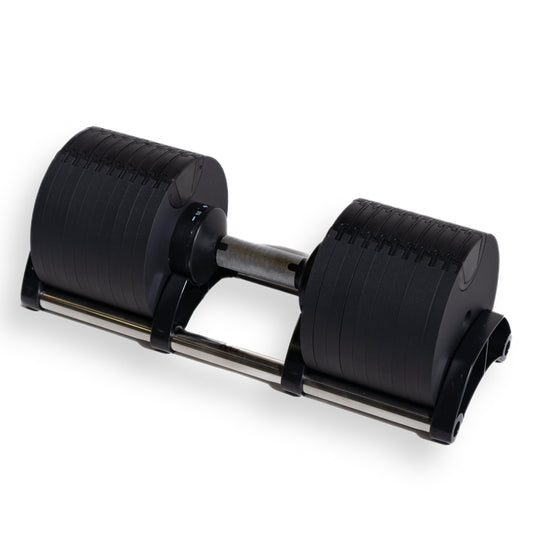
This is one reason why it's important to have a range of dumbbell weights, or an adjustable dumbbell that goes down to a relatively light weight. You need these lighter weights to effectively perform exercises like lateral raises, especially when you're starting out.
Another mistake some people make is lifting their arms above shoulder height. That can strain your shoulder joints.
The same goes with your core. Keep your core engaged and maintain good posture to prevent unnecessary strain on your lower back.

What Muscles Do Lateral Raises Work?
When done right, lateral raises work your lateral deltoid muscles. Those are the muscles on the outside of your shoulders. They're responsible for the broad shoulder look so many people strive for.
Lateral raises are considered one of the most effective isolation exercises for a reason. Research suggests that lateral raises activate your lateral and rear deltoid muscles better than bench presses.
That's not all, though.
Lateral raises also work other related muscles, which act as stabilizers during the movement. These include:
- Anterior deltoids, which are the muscles at the front of your shoulder.
- Posterior deltoids, the muscles at the back of your shoulder.
- Upper traps, the muscles on your upper back and neck.
Lateral raises also target the rotator cuff, a group of muscles surrounding and supporting your shoulder joints.
Potential Benefits of Lateral Raises
As you can imagine, lateral raises are fantastic for developing shoulder strength, size, and shape. They can also support shoulder stability.
By strengthening your deltoid muscles, lateral raises may also help reduce the risk of shoulder injury. Strengthening these shoulder muscles may also help enhance your performance in other upper-body pressing movements, like shoulder presses and overhead presses.
Bonus: Should You Have a Protein Shake Before or After a Workout?
How to Add Lateral Raises to Your Workout Routine
A standard recommendation is to perform 3-4 sets of lateral raises, with 10-15 reps in each set. People often pair them with compound lifts.
Many people aim to train their shoulders 2-3 times per week. That gives your shoulder muscles time to rest and repair in between workouts.
Lateral Raise Variations
Dumbbell lateral raises may be a staple of many a shoulder workout, but they aren't the only option. There are plenty of variations that can provide unique potential benefits.
One-Arm Dumbbell Lateral Raises
One simple option is to focus on one arm at a time. That's a great way to address imbalances.
Cable Lateral Raises
A cable machine or functional trainer is a great way to do lateral raises. When you use a cable, you maintain constant tension through the whole range of movement.
You can also use resistance bands to do lateral raises. Resistance band lateral raises are great for beginners and for warm-ups.
Seated Lateral Raises

Sitting down during your lateral raises is completely legitimate. Doing so can reduce momentum and help you focus on and hit your shoulders.
Leaning Lateral Raises
Leaning lateral raises are a more complicated variation. You hold onto an anchor point with one arm, lean away from it, and do a one-arm lateral raise with your other arm.
Adjusting the angle of resistance can help you increase the challenge and target your shoulder muscles differently.
Conclusion
Lateral raises primarily target your lateral deltoids. They also hit your anterior and posterior deltoids and your upper traps.
Frequently Asked Questions
Why Are Lateral Raises So Hard?
Lateral raises feel hard in part because your shoulder muscles are often relatively small compared to other major muscle groups, like your glutes. The movement also features intense biomechanical leverage, as the weight is far from the turning point of the movement.
Is a 20 lb Lat Raise Good?
Yes! 20 pounds is a solid weight for lat raises. That's assuming you perform them with good form.
Are Lateral Raises Even Worth It?
Lateral raises are worth it if you want strong, wide, rounded shoulders.
Keep Reading: How Long a Gym Pump Lasts & How to Keep It
--
Minibeast believes that everyone has the power to evolve into their best self. From state-of-the-art fitness equipment to comprehensive training programs, our brand is built for those who take their goals seriously. Through The Heart of Minibeast, 5% of every order helps feed families in need and support community programs. Get the latest workout tips, product updates, and fitness content by following us on Instagram, Facebook, YouTube, and TikTok.
–
These statements have not been evaluated by the Food and Drug Administration. These products are not intended to diagnose, treat, cure, or prevent any disease. The information provided on this website is for informational purposes only and is not intended as a substitute for professional medical advice, diagnosis, or treatment. Always seek the advice of a qualified healthcare provider with any questions you may have regarding a medical condition or before starting any new diet, exercise program, supplement, or using any fitness equipment or apparel. By using this site and its products, you acknowledge that you do so at your own risk. Use all products only as directed and discontinue use immediately if discomfort or adverse effects occur.