Should I Lose Weight Before Building Muscle?

It's one of the most-asked questions in fitness. But the answer is more complicated than you might think.
We explore the research-backed principles of fat loss and muscle growth to help you map out and achieve your fitness goals.
Key Takeaways
- People with excess body fat are usually told to prioritize fat loss over muscle building.
- There are exceptions, like people who are "skinny fat."
- Many people can lose fat and build muscle simultaneously through a process called body recomposition.
- In general, resistance training can provide benefits whether you are focusing on losing fat or building muscle.
- Professionally designed training plans can help you lose fat and build muscle.
Explore More: What Should I Wear to the Gym?
Fat Loss vs. Muscle Gain
Carriejune, founder of Minibeast, says:
"If you have excess body fat, people often recommend focusing on fat loss before muscle building. But many people, especially beginners, can build muscle and lose fat at the same time."
Millions of people around the world have asked themselves the same questions.
Should I lose weight before building muscle? Or should I try building muscle first, then lose the weight?
It's one of the most common questions in fitness. The reason it's so common is that there isn't a simple answer.
That's because the answer depends on who's asking. Certain people may benefit from weight loss before focusing on building lean muscle mass. Others may want to jump right into building muscle.
The question is also popular in part because of a few persistent myths. For example, some people believe muscle growth is impossible while on a caloric deficit. Others insist you need to be lean before even trying to build muscle.
We'll cover what the science really says about the relationship between fat loss and muscle gain. Along the way, we'll clear up some myths surrounding these foundations of many people's fitness goals. Starting with what you really mean when you wonder if you should "lose weight."

What We Mean By Body Weight
What do you mean when you say you want to lose weight? For many people, that means lowering the scale weight.
But that's not always a helpful metric. For example, muscle building can actually increase your weight. But that doesn't mean building muscle is bad.
In this scenario, most people actually mean to ask if they should lose fat before building muscle. But that's an entirely different question.
Body weight literally refers to everything inside you. That includes fat and muscle, but also organs, water, connective tissues...
Instead, a more helpful metric is body composition.
Learn More: The Best Gym Machines for Abs and Core Strength
Understanding Body Composition
Body composition refers to the ratio of lean body mass and fat mass within your body.
Fat mass is, well, fat. There are different kinds of fat. Some lies just under the skin, while some surrounds your organs.
Lean body mass is everything else. That includes muscle mass, but also water, bone, and organs.
Body composition explains why two people who weigh the exact same can look drastically different. It also helps explain why those two people may have markedly different abilities in the gym, or different health profiles.
Rather than losing weight, most fitness programs focus on improving body composition. In other words, the aim is usually to lose fat and gain muscle.
Body Fat Percentage
One of the most common ways to quantify body composition is body fat percentage. It represents the percentage of your body weight that comes from fat.
A healthy body fat percentage can vary. It depends on your age, gender, activity level, and other factors.
For men, experts generally recommend aiming for 14-17%. Athletes might go as low as 6%, while anything up to 24% is considered acceptable.
Women often naturally have higher body fat percentages. Experts recommend aiming for 21-24%. Athletes might go down to 14%.
As you can see, you don't want no fat at all. In fact, fat plays many important roles within your body. Losing too much fat can be disastrous for your health.
That said, having too much fat can also be detrimental to health. Instead, you want to aim for somewhere in the healthy range.
Unfortunately, it's trickier to measure body fat percentage than it is body weight. One at-home method involves taking body measurements and putting them into an online calculator. A personal trainer can help you with this.
Deciding What to Do First

The reason you might want to estimate body fat percentage is that it can help you decide whether to prioritize weight loss or building muscle.
Experts generally recommend focusing on fat loss if your body fat percentage is unhealthily high. Too much body fat causes a number of health problems, and can actually interfere with muscle building.
In other words, if you have excess body fat, losing it can actually help your muscle building down the line.
That doesn't mean you shouldn't start resistance training, though. Strength training can provide benefits even if your primary focus is on losing fat.
On the other hand, if you already have a low body fat percentage, experts generally recommend getting straight to building more muscle.
However, this decision isn't always so simple.
For example, some people have a low body weight but a high body fat percentage. This is often referred to as being "skinny fat."
In this case, you don't really have that much weight to lose. Trying to lose weight might result in muscle loss and could make you feel worse rather than better. Instead, experts often recommend focusing on building muscle first.
Body Recomposition: Do Both At Once
Here's where the real nuance comes in. Many people don't actually have to choose between losing fat and building muscle at all.
That's right. You can do both simultaneously. This process is called body recomposition.
For a long time, people thought this was impossible. But research has proved it is, in fact, very much possible.
The principle is quite simple. All you need to do is stick to your resistance training program while avoiding a calorie surplus. In fact, it's even possible to build muscle while in a slight calorie deficit.
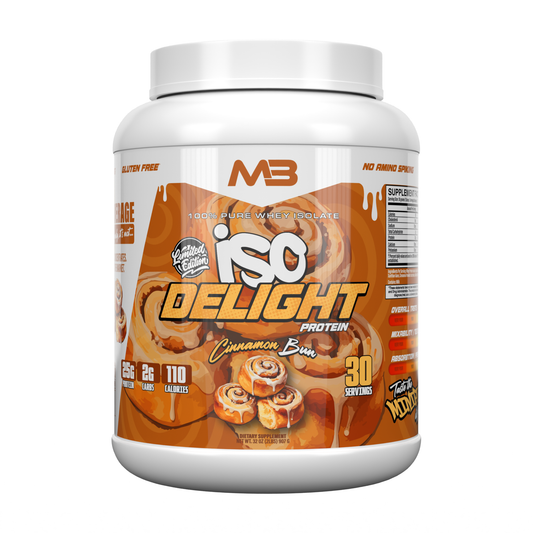
The key is getting enough protein. Experts generally recommend aiming for between 0.7g and 1g of protein per pound of body weight per day. A high-quality protein powder like Minibeast's Isodelight Protein can help with that.
Body recomposition is generally considered easier for people who are new to strength training or those returning after a long time.
There is a slight caveat. Studies have found that body recomposition can take longer to produce comparable results to training with a slight calorie surplus.
The main benefit, though, is that you avoid the ups and downs of bulking and cutting.
Training Plans to Lose Fat and Gain Muscle
If you're still unsure, consider letting a professional guide you.
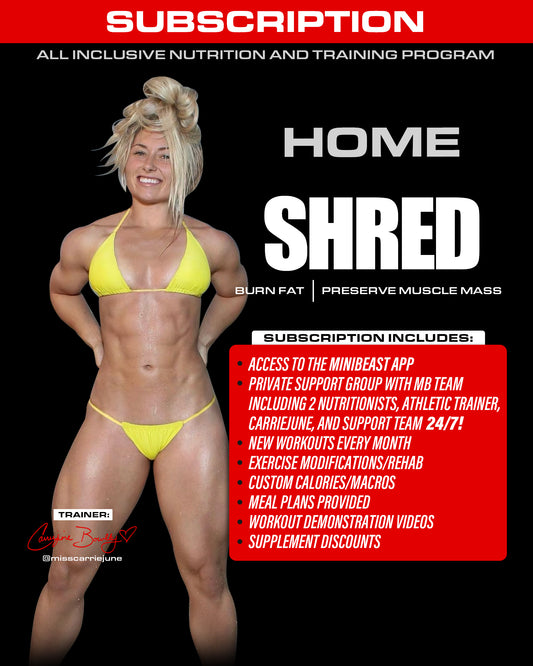
Minibeast's Shredding Program is designed to help you burn fat while preserving muscle mass. You'll get a custom meal plan based on your body composition and goals, plus recipes and a full at-home workout program.
Another option is Minibeast's 8-Week Workout Challenge. It's a comprehensive nutrition and training program that has been proven on hundreds of thousands of people.
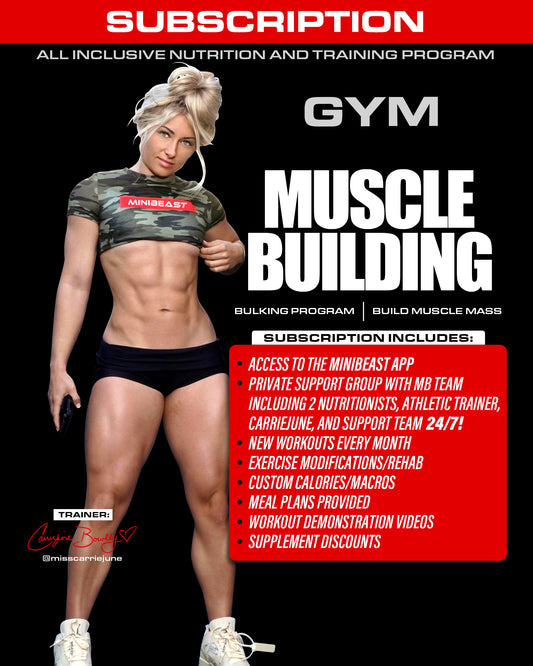
If your aim is to pack on muscle mass, try Minibeast's Muscle Building Program. It's designed to do exactly what it says: Help you build muscle.
 Conclusion
Experts often recommend that people with excess body fat focus on fat loss before prioritizing building muscle. However, there are exceptions to that, and many people can lose fat and add muscle at the same time. That's called body recomposition.
Frequently Asked Questions
Is It Better to Lose Weight Before Trying to Gain Muscle?
That depends on your body composition. If you have excess body fat, experts often recommend making fat loss your primary goal before switching focus to building muscle. However, beginners can often lose fat and build muscle at the same time, through a process called body recomposition.
How Long Should a 20-Pound Bulk Take?
A sustainable 20-pound bulk usually takes between 4 and 6 months. That's based on gaining between 0.5 and 1lb every week. It's possible to bulk faster, though that usually means adding more fat as well as muscle.
At What Age Is It Hardest to Gain Muscle?
Muscle loss naturally begins to accelerate after 50. From there, it often becomes increasingly difficult to build muscle. It's not impossible, though.
Read On: How to Squat with Dumbbells for Your Next Leg Day
-
Minibeast believes that everyone has the power to evolve into their best self. From state-of-the-art fitness equipment to comprehensive training programs, our brand is built for those who take their goals seriously. Through The Heart of Minibeast, 5% of every order helps feed families in need and support community programs. Get the latest workout tips, product updates, and fitness content by following us on Instagram, Facebook, YouTube, and TikTok.
–
These statements have not been evaluated by the Food and Drug Administration. These products are not intended to diagnose, treat, cure, or prevent any disease. The information provided on this website is for informational purposes only and is not intended as a substitute for professional medical advice, diagnosis, or treatment. Always seek the advice of a qualified healthcare provider with any questions you may have regarding a medical condition or before starting any new diet, exercise program, supplement, or using any fitness equipment or apparel. By using this site and its products, you acknowledge that you do so at your own risk. Use all products only as directed and discontinue use immediately if discomfort or adverse effects occur.