How Many Days a Week Should I Lift Weights?

When it comes to lifting weights, more isn't always better.
You might love spending time in the gym, but your muscles also need a chance to recover and grow. So, how many days a week should you lift weights to see results?
The right schedule is never the same, it depends on your experience and fitness goals. Here's how to find the sweet spot.
Key Takeaways
- Most adults benefit from lifting weights at least twice per week.
- Beginners can start with two to three strength training sessions weekly.
- Intermediate lifters often train three to four days, while advanced lifters may train four to five.
- Total weekly training volume matters more for muscle growth than frequency alone.
- Rest days help your muscles recover and reduce the risk of overuse injuries.
See More: How To Build Your Own Workout Routine
How Many Days a Week Should You Lift Weights?
Carriejune, founder of Minibeast, says:
"You don't need to lift weights every day to make progress. Find a schedule you can stick to. Then, train with intention and give your muscles time to recover."
For most adults, two to four days a week is a practical starting range for weight training.
Trainers and sports scientists recommend muscle-strengthening activity twice per week, covering all major muscle groups.
However, that's a general guideline, rather than a fixed rule for building muscle or improving sports performance.
Your ideal training frequency depends on how hard you train. It also rests on your personal goals and whether your body can recover between sessions.

How Often Should You Lift Weights Based on Experience?
Your fitness level is a useful starting point when planning strength sessions. Here are the guidelines trainers usually give out.
Beginners: 2 to 3 Days a Week
If you're new to resistance training, start with two or three full-body workouts on nonconsecutive days. That means don’t train them all in a row.
Two to three sessions give you time to practice proper form and get comfortable with different exercises.
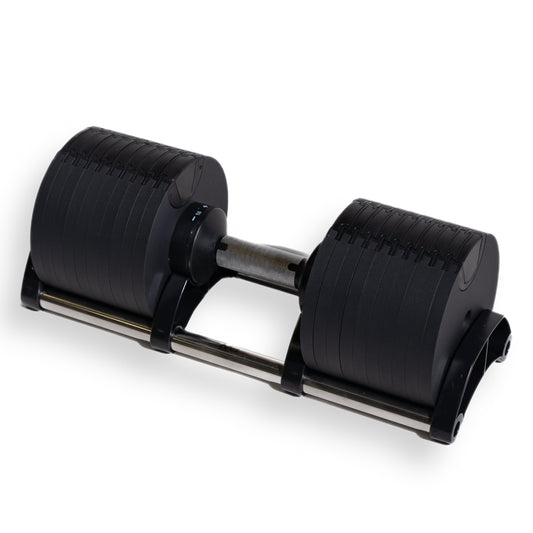
Also, you don't need heavy weights to begin. Choose manageable resistance and gradually increase the challenge as your technique improves. Adjustable Dumbbells are popular for beginners, as they can be adapted to their needs.
If you’re completely new, it can be good to work with a personal trainer at the beginning to make sure you understand the equipment and good form.
Intermediate Lifters: 3 to 4 Days a Week
Once you've established a consistent routine, three or four lifting days can help you distribute more challenging work across the week.
An upper/lower split is a popular option that alternates between upper-body and lower-body training.
This allows you to increase your weekly workload without making every session excessively long.
That said, still allow ample recovery time and don't push through pain or discomfort.
Advanced Lifters: 4 to 5 Days a Week
Experienced lifters may benefit from four or five days a week, particularly when managing higher training volumes.
They might use upper/lower routines, push-pull-legs splits, or programs built around specific muscle groups, such as the Minibeast 8 Week Workout Challenge, which includes five individual workout programs.
However, advanced doesn't automatically mean training more often.
Your schedule should still reflect your recovery, goals, and total workload—all of which may not require a higher session frequency.
How Often Should You Lift Weights to Build Muscle?
If muscle growth is your goal, weekly training volume usually matters more than how many days you lift.
Training volume refers to the amount of work you complete, often measured in challenging sets per muscle group per week.
For example, you could complete 12 weekly sets for your quadriceps across two workouts or spread them over three.
Research suggests that when weekly volume is similar, training frequency alone has relatively little effect on muscle growth.
Around 10 to 20 challenging sets per muscle group weekly is a commonly discussed range for hypertrophy, but it's not a requirement. Beginners can build muscle with considerably less.
As we've suggested already, focus on gradually increasing resistance or repetitions while maintaining proper form no matter what you do.
And now is always a good time to start, even if you are completely new!
Strength training helps preserve muscle mass as you age, making it valuable for long-term health and everyday activities.

Full Body Workouts vs. Upper and Lower Body Splits
Both approaches can build muscle effectively. The best choice depends on how many days you have available and your general fitness.
Here’s how the workout styles weigh up.
- Full body workouts train several major muscle groups in one session, making them convenient for two- or three-day schedules.
- Upper/lower splits alternate between upper body and lower body sessions, for more focused training across four days.
- Push-pull-legs splits organize exercises by movement pattern. These suit lifters who prefer more frequent sessions.
Remember, there's no need to switch to a complicated split just because you've been lifting for a while.
It’s better to choose a structure that lets you train each muscle group consistently without sacrificing recovery.
Bonus: Does Lifting Weights Stunt Growth? What The Science Says
Sample Weightlifting Schedules Per Week
Not sure how to organize your strength training sessions?
Let’s take a look at a few examples, as suggested by personal trainers.
If you're lifting three days a week, you could schedule full-body workouts on Monday, Wednesday, and Friday, giving your muscles time to recover between sessions.
If you prefer lifting four days a week, try an upper/lower split. For example, train your upper body on Monday and Thursday, then focus on your lower body on Tuesday and Friday. This again balances the stress on different muscle groups.
However, these are just two examples, and not at all strict fitness rules.
A certified personal trainer can help tailor your schedule to your goals and recovery needs. Likewise, online training programs can give you a general roadmap.
And we must repeat the key message!
More lifting days don't automatically mean better results.

How Many Recovery Days Do You Need Per Week?
Your muscles adapt to resistance training during recovery. Some days you need to put the dumbbells down!
Since we’ve already stressed the importance of rest days above, allow us to explain why they’re so critical to a weightlifting plan.
Many people benefit from one or two rest days per week, particularly when training intensely. This lets the muscles recover and rebuild.
Aim for roughly 48 hours between demanding sessions for the same muscle group as a useful starting point, though individual recovery needs vary.
Signs you may need additional recovery days:
- Persistent muscle soreness that affects your workouts
- Declining strength or sports performance
- Unusual fatigue or poor sleep
- Reduced motivation to train
- Joint discomfort or recurring aches
Worried about inactive days? Active recovery, such as walking, gentle yoga, or at-home exercises, can keep you moving without adding significant training stress.
If you notice any pain or discomfort, stop any activity, even active recovery.
Adequate rest helps reduce overuse injuries and gives your body time to recover before the next challenging session.
What About Cardio and Other Physical Activity Guidelines?
Although this article focuses on weightlifting, aerobic activity is still important because it supports heart health and overall fitness.
Healthcare professionals recommend at least 150 minutes of moderate-intensity aerobic activity or 75 minutes of vigorous-intensity activity per week, alongside strength training.
Cardio can increase calorie expenditure, support weight loss or weight management, and even improve mood, which is always a bonus. It can also help against heart disease.
A schedule with three lifting days and two cardio days can work well, but it's not the only option. You can also combine shorter aerobic sessions that increase calorie expenditure with your strength workouts if you want to target both exercises in one go.
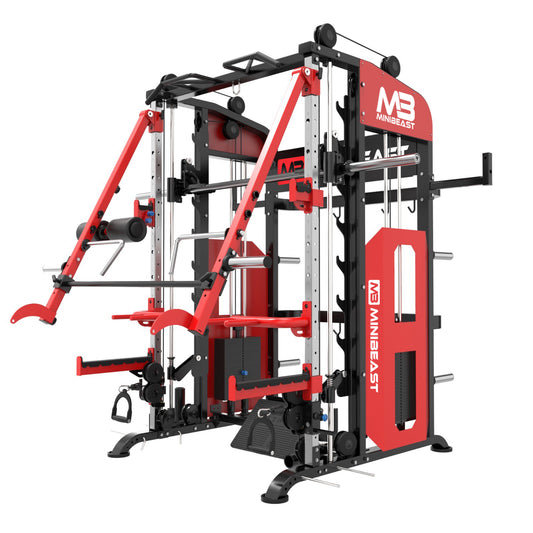
If you like mixing workouts, an All-In-1 Total Home Gym machine can help. The Minibeast design provides over 350 exercises in one piece of equipment.
Pay attention to your exertion and let your body recover rather than trying to fit every type of exercise into every day, though.

Conclusion
For most people, two to four sessions per week provide a solid weightlifting foundation, while experienced lifters may choose five depending on their goals.
Whether you're training for muscle mass or general health, focus on manageable weekly volume and adequate recovery. And then stay consistent!
Frequently Asked Questions
Is Lifting 5 Days a Week Too Much?
Not necessarily, though it’s not recommended for beginners. Five days can work for experienced lifters who distribute training across different muscle groups and recover adequately. If performance drops or fatigue builds, consider reducing your workload.
Is Weightlifting 3 Times a Week Enough?
Yes. Three well-planned strength sessions can build muscle and improve strength, especially when you train major muscle groups consistently and gradually increase the challenge.
What Is the 3/2/1 Rule in the Gym?
The 3/2/1 rule commonly describes three strength sessions, two Pilates workouts, and one cardio session weekly. It's a popular fitness scheduling approach, especially on social media. Though we must stress that it is not a scientific requirement for muscle growth.
Keep Reading: What Muscles Do Squats Work? Variations & More
--
Minibeast believes that everyone has the power to evolve into their best self. From state-of-the-art fitness equipment to comprehensive training programs, our brand is built for those who take their goals seriously. Through The Heart of Minibeast, 5% of every order helps feed families in need and support community programs. Get the latest workout tips, product updates, and fitness content by following us on Instagram, Facebook, YouTube, and TikTok.
–
These statements have not been evaluated by the Food and Drug Administration. These products are not intended to diagnose, treat, cure, or prevent any disease. The information provided on this website is for informational purposes only and is not intended as a substitute for professional medical advice, diagnosis, or treatment. Always seek the advice of a qualified healthcare provider with any questions you may have regarding a medical condition or before starting any new diet, exercise program, supplement, or using any fitness equipment or apparel. By using this site and its products, you acknowledge that you do so at your own risk. Use all products only as directed and discontinue use immediately if discomfort or adverse effects occur.