Do Squats Actually Make Your Butt Bigger?

Want a bigger booty but aren't sure whether squats are the answer?
Squats are a gym staple for good reason. They work several lower-body muscles, including your glutes, and can help you build all-important strength. But doing a few squats every day doesn't necessarily mean your butt will grow.
Here's what squats can realistically do for your glutes, which variations are worth trying, and how to make your booty training count.
Key Takeaways
- Squats can make your butt bigger by helping your glute muscles grow.
- Adding resistance and gradually increasing the challenge are important for muscle growth.
- Squat depth and technique can influence glute development.
- Hip thrusts, glute bridges, and other exercises can complement squats.
- Nutrition and genetics also affect your results.
See More: Does Leg Press Work Your Glutes?
Do Squats Make Your Butt Bigger?
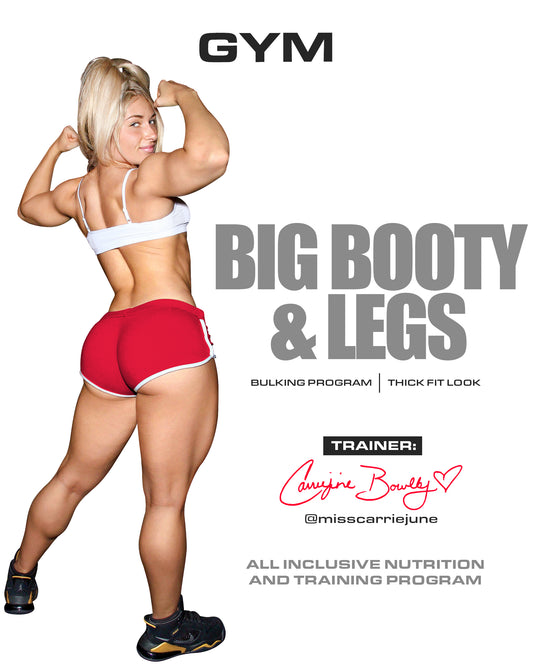
Carriejune, founder of Minibeast, says:
"Yes, squats can make your butt bigger because they train your glute muscles, which directly influence the appearance of your booty. But if you want noticeable growth, you'll need to challenge those muscles consistently, gradually increase resistance, and give your body enough fuel and recovery time after each session!"
Squats are a compound exercise, meaning several muscle groups work together during each repetition.
Your glutes help extend your hips as you stand up from the bottom of a squat. When you challenge them with resistance over time, they can grow through a process called muscle hypertrophy.
That said, results depend on your starting strength, workout routine, nutrition, and genetics can even affect the outcome.
Bodyweight squats can be a useful starting point, especially for beginners. As you get stronger, though, you'll likely need to make the exercise more demanding to keep building butt muscles.

What Muscle Groups Do Squats Work?
Squats do much more than train your butt, though this is also part of the process. They recruit muscles throughout your lower body and core to help you move and stay balanced.
The main muscle groups involved in squats include:
- Gluteus maximus - The largest glute muscle, responsible for much of the hip extension involved in standing up.
- Quadriceps - The muscles at the front of your thighs that help straighten your knees.
- Hamstrings - Muscles at the back of your thighs that contribute to hip and knee control.
- Core muscles - Your abdominals and spinal erectors help stabilize your torso throughout the movement.
The gluteus medius and minimus also help stabilize your hips and pelvis.
Although squats engage all three glute muscles, they don't challenge each one equally. That's one reason combining different lower-body exercises can be useful when aiming for booty gains.
How to Do Squats for Bigger Glutes
If your goal is glute growth, simply adding more repetitions isn't always the best approach.
Progress can depend on a variety of factors, but these four adjustments can help you get more from your squats.
1. Focus on Proper Squat Form
Start with your feet around shoulder-width apart, with your toes pointing slightly outward if that feels comfortable.
Bend at your hips and knees as though you're sitting into a chair. Keep your torso controlled, your feet planted, and your knees tracking in the same general direction as your toes. Then push through your feet to return to standing.
Avoid forcing your back perfectly upright or trying to keep your knees behind your toes at all costs.
If you're unsure about your technique, a qualified personal trainer can help. Poor squat form can lead to hip or knee injuries.
2. Use a Comfortable Range of Motion
Squat depth can influence how much work your glutes perform.
Research suggests that deeper squats may promote greater gluteus maximus growth than shallower squats in some training conditions.
In fact, one study comparing squat depths found that full squats produced greater gluteus maximus growth than half squats over 10 weeks of training.
However, that doesn't mean everyone needs to squat as low as possible.
Lower yourself as far as you can while maintaining control and a comfortable position. You can work on your mobility and technique gradually, and consider balance while you are practicing.
3. Gradually Increase Resistance
Muscles adapt when they're challenged, so your workouts need to progress over time, especially if your goal is a more prominent butt.
You might start with a bodyweight squat, move to a dumbbell goblet squat, and eventually try heavier resistance. This approach is called progressive overload.
You can also progress by adding repetitions, sets, or improving your control before increasing the weight.
Minibeast’s Adjustable Dumbbells can help you work out, with weights from 10lb to 100lb that can be used to target a range of muscle groups.
That said, the aim isn't to lift the heaviest weight in the gym. While lifting heavy weights can increase testosterone levels for muscle growth, it's better to make steady progress without sacrificing technique.
4. Give Your Glutes Time to Recover
Training hard every day isn't a shortcut to a bigger butt. Sorry!
Your muscles need sufficient recovery between challenging workouts, along with adequate food and protein to support growth. Isolate protein, like in Minibeast’s IsoDelight, can help you meet your macro goals.
If you're new to strength training, two or three lower-body sessions per week can be a practical starting point, provided you manage the overall workload.
Consistency over several months matters more than squeezing in as many squats as possible this week. This is because squats may cause muscle micro-tears that lead to growth when repaired through rest.

What Are the Best Squat Variations for Glute Growth?
Alongside standard squats, which can activate the glutes at 40% to 60% of their capacity, you can consider:
Goblet Squats
A goblet squat involves holding a dumbbell or kettlebell close to your chest while squatting.
It's a useful progression from bodyweight squats and can help you practice controlling the movement while adding resistance.
Sumo Squats
For a sumo squat, position your feet wider than shoulder-width apart and turn your toes outward comfortably.
A wider stance isn't automatically better for glute growth, so choose a width that feels stable and allows good technique.
Bulgarian Split Squats
Bulgarian split squats involve placing one foot behind you on a bench while lowering your body with the front leg.
They challenge each leg individually and train your glutes, quadriceps, and stabilizing muscles.
Barbell Back Squats
Barbell back squats allow you to add substantial resistance as your strength improves.
They're an effective option for building lower-body strength and muscle, provided you use a suitable weight and maintain control.
If you're a beginner, practice the movement first before progressing to heavier loads.
Jump Squats
Jump squats are another beneficial option, as they boost heart rate while also strengthening your glutes.
Bonus: Does Cycling Build Glutes? Here's What the Science Says

How Many Squats Should You Do to Make Your Butt Bigger?
Unfortunately, there's no magic number of squats that guarantees a bigger butt.
For beginners, two or three sets of around 8 to 12 controlled repetitions can be a reasonable place to start.
Choose a resistance that makes the final few repetitions challenging while still allowing proper form. As you improve, adjust the weight, repetitions, or number of sets based on your progress.
And what about those 100-squats-a-day challenges?
They might improve your muscular endurance, particularly if you're starting from very little activity. But repeating the same easy bodyweight squats every day isn't necessarily the most effective way to build bigger glutes.
A structured strength-training routine, such as the Minibeast 8 Week Workout Challenge, gives you more opportunities to increase the challenge and recover between sessions.
Are Squats Alone Enough to Build a Bigger Butt?
Squats are effective, but they don't have to be your only glute exercise! This is where you can be creative.
For instance, adding movements that challenge your hips in different positions can help you create a more balanced workout.
A 2023 study comparing squats and hip thrusts found that both exercises produced similar glute muscle growth over nine weeks, showing that you have more than one effective option for building your booty.
Some useful alternative options include:
- Hip thrusts for resisted hip extension
- Glute bridges for a beginner-friendly glute exercise
- Romanian deadlifts for the glutes and hamstrings
- Hip abduction exercises for the muscles around the sides of your hips
And don’t worry, you don't need to perform every exercise in a single session.

Can Squats Change Your Butt Shape or Reduce Extra Body Fat?
It’s true that building more glute muscle can make your butt appear fuller or firmer over time.
However, your natural shape also depends on genetics and bone structure. It’s also affected by how your body distributes fat.
Squats burn energy, but they can't selectively remove fat from your butt or any other body part. Fat loss happens across the body according to factors that include your overall energy balance and genetics.
You might notice changes in muscle definition as your body composition changes, even without a dramatic increase in glute size.
If building a bigger butt is your priority, focus on resistance training, eating enough to support muscle growth, and being patient with the process if you want to burn fat cells.
Conclusion
Yes, squats can help make your butt bigger, but there's more to glute growth than counting repetitions.
Increase the challenge gradually and combine squats with other glute exercises, good nutrition, good form, and recovery. The results won't happen overnight, but consistent training can make a difference!
Frequently Asked Questions
Do 100 Squats a Day Make Your Butt Bigger?
Doing 100 squats a day may improve endurance, especially for beginners, but it doesn't guarantee significant muscle growth. Once bodyweight squats become easy, increasing resistance and allowing recovery are generally more useful for building bigger glutes.
How Long Does It Take for Squats to Make Your Butt Bigger?
It's hard to say, as it varies depending on your training experience, genetics, diet, and workout routine. Strength improvements may appear before visible changes in muscle size. Noticeable glute growth and more muscle generally take consistent training over weeks to months.
Do Squats Make Your Hips Wider?
Squats can't change the width of your pelvic bones. However, building the glute muscles may change how your hips and butt look. Remember that your overall body shape also depends on genetics and fat distribution.
Keep Reading: 5 Things to Consider When Choosing a Gym
--
Minibeast believes that everyone has the power to evolve into their best self. From state-of-the-art fitness equipment to comprehensive training programs, our brand is built for those who take their goals seriously. Through The Heart of Minibeast, 5% of every order helps feed families in need and support community programs. Get the latest workout tips, product updates, and fitness content by following us on Instagram, Facebook, YouTube, and TikTok.
–
These statements have not been evaluated by the Food and Drug Administration. These products are not intended to diagnose, treat, cure, or prevent any disease. The information provided on this website is for informational purposes only and is not intended as a substitute for professional medical advice, diagnosis, or treatment. Always seek the advice of a qualified healthcare provider with any questions you may have regarding a medical condition or before starting any new diet, exercise program, supplement, or using any fitness equipment or apparel. By using this site and its products, you acknowledge that you do so at your own risk. Use all products only as directed and discontinue use immediately if discomfort or adverse effects occur.